How Genre Algorithms Predict Script Marketability

- Can ScriptBook’s AI Save The Film Industry From Itself? | FilmStuck Podcast with Nadira Azermai
- Script Elements That Genre Algorithms Analyze
- How Genre Algorithms Predict Marketability
- Benefits and Limitations of Genre Algorithms
- Using AIScriptReader for Script Analysis
- Conclusion: Genre Algorithms and Script Marketability
- FAQs
Genre algorithms are transforming how scripts are evaluated in the U.S. entertainment industry. These AI tools analyze screenplays to predict their market potential by identifying genre-specific patterns, evaluating plot structure, character development, dialogue, and thematic elements. Studios use these systems to reduce bias, align scripts with audience preferences, and forecast box office performance with high accuracy. However, while they excel in efficiency and consistency, they face challenges in interpreting emotional depth and avoiding formulaic outcomes.
Key Points:
- What They Do: Analyze scripts for genre markers and market trends using AI and NLP.
- Why They Matter: Help predict script success in a competitive market, reducing financial risks.
- How They Work: Use data on audience preferences, box office trends, and storytelling patterns.
- Challenges: Struggle with emotional nuance and may reinforce conventional storytelling.
AIScriptReader is one example of a platform leveraging genre algorithms, offering fast, detailed script evaluations for $39-$69, tailored to the U.S. market. While these tools provide valuable insights, they work best when paired with human creativity to refine and elevate storytelling.
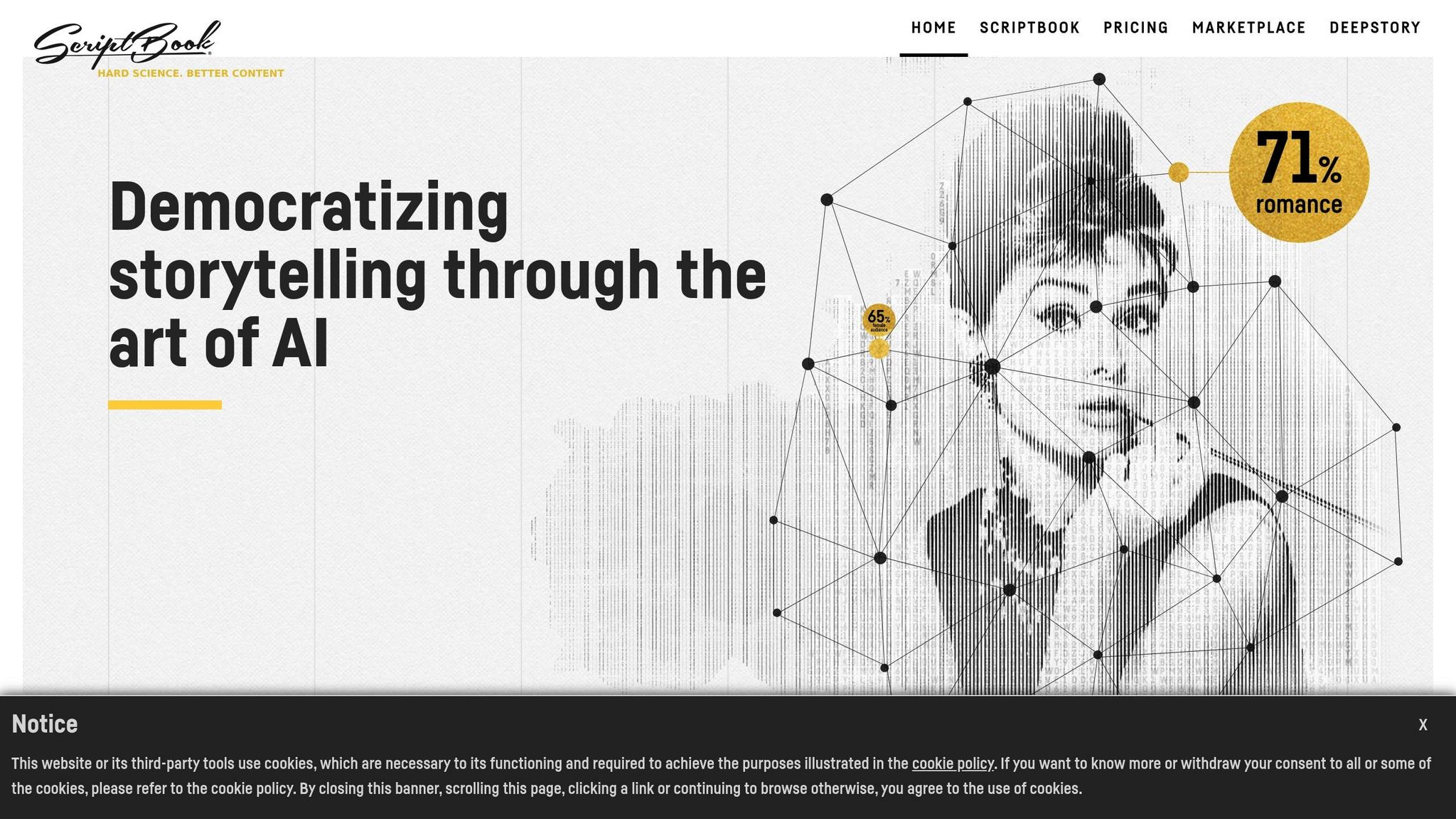
Can ScriptBook’s AI Save The Film Industry From Itself? | FilmStuck Podcast with Nadira Azermai
Script Elements That Genre Algorithms Analyze
Genre algorithms dissect screenplays to identify genre classifications and assess market potential. By breaking down scripts into measurable components, these AI tools uncover patterns tied to successful films in the U.S. market. These findings play a key role in predicting marketability, which we'll explore further.
Main Script Components in Genre Analysis
Plot Structure
Algorithms evaluate how scenes are arranged and paced, identifying narrative cues like suspense in thrillers.
Character Development
AI tracks dialogue and decisions to assess the consistency of character arcs. For instance, models can map out character transformations by analyzing their goals, emotions, and actions.
Dialogue Analysis
Dialogue is scrutinized for authenticity and distinctiveness, with AI systems matching human evaluations in scoring conversational flow and character voice.
Emotional Tone
Sentiment analysis tools examine the emotional tone of scenes, ensuring a balanced mix of drama, humor, and suspense.
Thematic Elements
Recurring themes are identified, and the system flags potentially problematic language or imagery.
Finding Genre-Specific Markers
AI pinpoints genre-specific traits, such as suspenseful pacing in thrillers, comedic timing, or the emotional interplay typical of romances. These systems are trained on successful films to recognize such markers.
One noteworthy example is the Portrayal system developed by Hoque et al., which uses linguistic analysis to map character development. Through visualizations, it helps writers identify weak or flat arcs and suggests improvements. Studies with writers have shown how Portrayal captures subtle character dynamics, making it a valuable tool for refining scripts.
Using natural language processing, algorithms analyze personality traits, plot structures, and recurring themes with impressive precision. Transformer models, for example, have achieved over 83% micro-precision in these tasks.
Using Market Data in Genre Analysis
Genre algorithms don't just stop at creative elements - they also incorporate market data to predict a script's commercial success. By analyzing box office data from similar films, these tools identify script features tied to profitability. ScriptBook, for instance, claims to forecast a film's financial success with 86% accuracy.
Audience demographics play a major role as well. Studios rely on established genre trends to align scripts with target audiences, reducing financial risks. AI models have been reported to predict box office performance with accuracies as high as 90%, based on key script features.
Streaming platforms like Netflix have also embraced AI for script evaluation. These tools assess pacing, thematic alignment, and audience suitability before greenlighting projects. Seasonal trends further refine these assessments; for instance, horror films tend to perform better in the fall, while family-friendly animations dominate summer releases. Scripts with clearly defined genres are 50% more likely to be fully reviewed by industry professionals, and 72% of agents prioritize genre when considering new projects.
Global trends are another factor. Algorithms monitor international markets to identify genres gaining popularity worldwide, helping producers align their projects with audience preferences.
How Genre Algorithms Predict Marketability
Genre algorithms use a structured process to examine scripts and predict their commercial appeal. By combining data analysis with advanced AI techniques, these systems provide studios with insights into a script's potential success in the market.
The Step-by-Step Analysis Process
The process begins with script ingestion, where Natural Language Processing (NLP) extracts key details from dialogue and descriptions. This is followed by genre indexing, where Machine Learning compares the script to extensive databases of successful templates. Finally, a commercial viability assessment uses Deep Learning to evaluate market performance based on factors like release timing, genre, and cast.
During genre indexing, the system analyzes writing styles, narrative structures, and creative elements, matching them to patterns that have historically performed well in similar genres. The commercial viability assessment then dives deeper, using Neural Networks to evaluate scenes for flow and coherence, ensuring they align with audience expectations.
"AI can analyze script data to provide insights on potential audience reception and possible recommendations for improvements." - Stewart Townsend, Author
This systematic approach allows for an unbiased evaluation, offering a reliable foundation for decision-making.
Reducing Bias in Script Evaluation
Traditional script evaluation often involves subjective judgments, which can lead to overlooked opportunities or misjudged potential. Genre algorithms counteract this by providing data-driven insights rooted in actual market trends.
By analyzing consumer behavior and preferences, these algorithms offer evaluations that are free from individual biases. This is particularly useful for scripts that push boundaries or experiment with unconventional storytelling. The use of standardized criteria ensures every script is assessed consistently, regardless of the evaluator's perspective.
For instance, studies reveal that movie trailers can identify genres with 91.9% accuracy, while movie posters and summaries achieve an 88.05% accuracy rate. Warner Bros. showcased the power of such tools when it used AI to optimize marketing strategies for Aquaman, contributing significantly to the film's box office success.
While these systems provide valuable insights, they are not meant to replace human creativity. Instead, they serve as a complement, offering objective analysis that creative teams can use to refine their decisions. Some studios also use these tools to gain demographic insights, enhancing their understanding of target audiences.
Updating Assessments as Scripts Change
Scripts evolve as writers incorporate feedback and make revisions. Genre algorithms are designed to adapt to these changes, ensuring their predictions remain accurate throughout the development process.
When updates are made, the system reassesses the script, identifying inconsistencies and reevaluating its analysis. For example, adding a new character arc or subplot triggers the algorithm to reexamine the script's genre classification and market potential. Cycle-breaking algorithms play a vital role here, eliminating conflicting elements and ensuring the script's coherence and appeal remain intact.
Netflix offers a real-world example of this adaptability. Its machine learning algorithms analyze viewing data and continuously refine content recommendations based on evolving audience preferences. Similarly, genre algorithms update their evaluations as scripts change, aligning them with current market trends and audience expectations.
Through this iterative process, each version of the screenplay is reassessed, ensuring it aligns with market demands and strengthens its commercial potential. This dynamic approach allows studios to refine scripts effectively, increasing their chances of success in an ever-changing entertainment landscape.
sbb-itb-44d62f7
Benefits and Limitations of Genre Algorithms
Genre algorithms have reshaped how studios evaluate scripts, offering both efficiency and data-driven insights while also presenting some creative and ethical challenges.
Advantages of Genre Algorithms
One of the most immediate benefits of genre algorithms is their speed and efficiency. These systems can process thousands of scripts in mere minutes. This rapid analysis allows studios to assess more projects and make quicker decisions - an essential advantage in an industry where timing often dictates success.
Another major advantage is the data-driven insights these algorithms provide. For instance, some leading studios use AI tools to analyze massive datasets, helping them forecast revenue and understand audience demographics. These tools can even predict a film’s success based on factors like its release date, genre, and cast, giving studios solid evidence to guide investment decisions.
Genre algorithms also bring consistency to the evaluation process. Unlike human readers, who may have subjective preferences, algorithms apply uniform criteria to every script. This impartiality ensures that bold or unconventional ideas aren’t dismissed simply due to personal bias.
Additionally, these tools excel in technical and logistical analysis. They can flag potential legal or safety concerns and optimize production schedules by predicting task durations. The growing confidence in AI’s role in the entertainment industry is evident, with the market for AI in media and entertainment valued at $10.87 billion in 2021 and projected to grow at a 26.9% annual rate through 2030.
However, while these strengths are compelling, there are notable limitations that need to be addressed.
Limitations and Challenges
Despite their benefits, genre algorithms have clear constraints. One major issue is their limited creative insight. As filmmaker Ava DuVernay aptly puts it:
"AI is a powerful lens, but human insight is the light that brings a story into focus."
AI struggles to grasp the emotional depth, humor, and subtlety that often define exceptional storytelling.
Another challenge is data dependency. These algorithms rely heavily on the data they’re trained on, which can lead to biases and a tendency to favor conventional storytelling. This focus on historical patterns risks producing formulaic content and discouraging creative risks.
Emotional and cultural nuances also pose significant hurdles. AI systems often fall short in understanding the complexities of human emotions and culturally specific elements. Scripts that hinge on intricate character development or subtle humor may be undervalued. Moreover, AI struggles with ambiguous dialogue, layered emotional expressions, and nuanced transitions, which can limit its effectiveness in sentiment analysis.
Finally, there are ethical and creative concerns. As AI takes on a larger role in the creative process, some fear it could devalue human creativity and flood the market with generic narratives. Questions about intellectual property and creative rights also arise when AI significantly contributes to scriptwriting.
Comparison Table: Pros and Cons
| Advantages | Limitations |
|---|---|
| Speed: Processes thousands of scripts in minutes | Limited creativity: Struggles with emotional depth and nuanced storytelling |
| Data-driven insights: Predicts success based on release date, genre, and cast | Data dependency: Relies on historical patterns, risking formulaic output |
| Consistency: Reduces subjective bias in evaluations | Cultural nuances: Lacks full understanding of emotional and cultural subtleties |
| Technical analysis: Flags legal and logistical issues | Ethical concerns: Raises questions about human creativity and intellectual property |
| Scalability: Handles large script volumes efficiently | Historical bias: May reinforce existing industry biases |
Genre algorithms work best as tools that complement human expertise. Studios that integrate AI effectively allow the technology to handle data-heavy tasks while relying on human judgment for creative and cultural insights. This balanced approach ensures that the speed and precision of AI are matched with the nuanced understanding only humans can provide. Together, they create a more comprehensive and strategic method for analyzing scripts.
Using AIScriptReader for Script Analysis
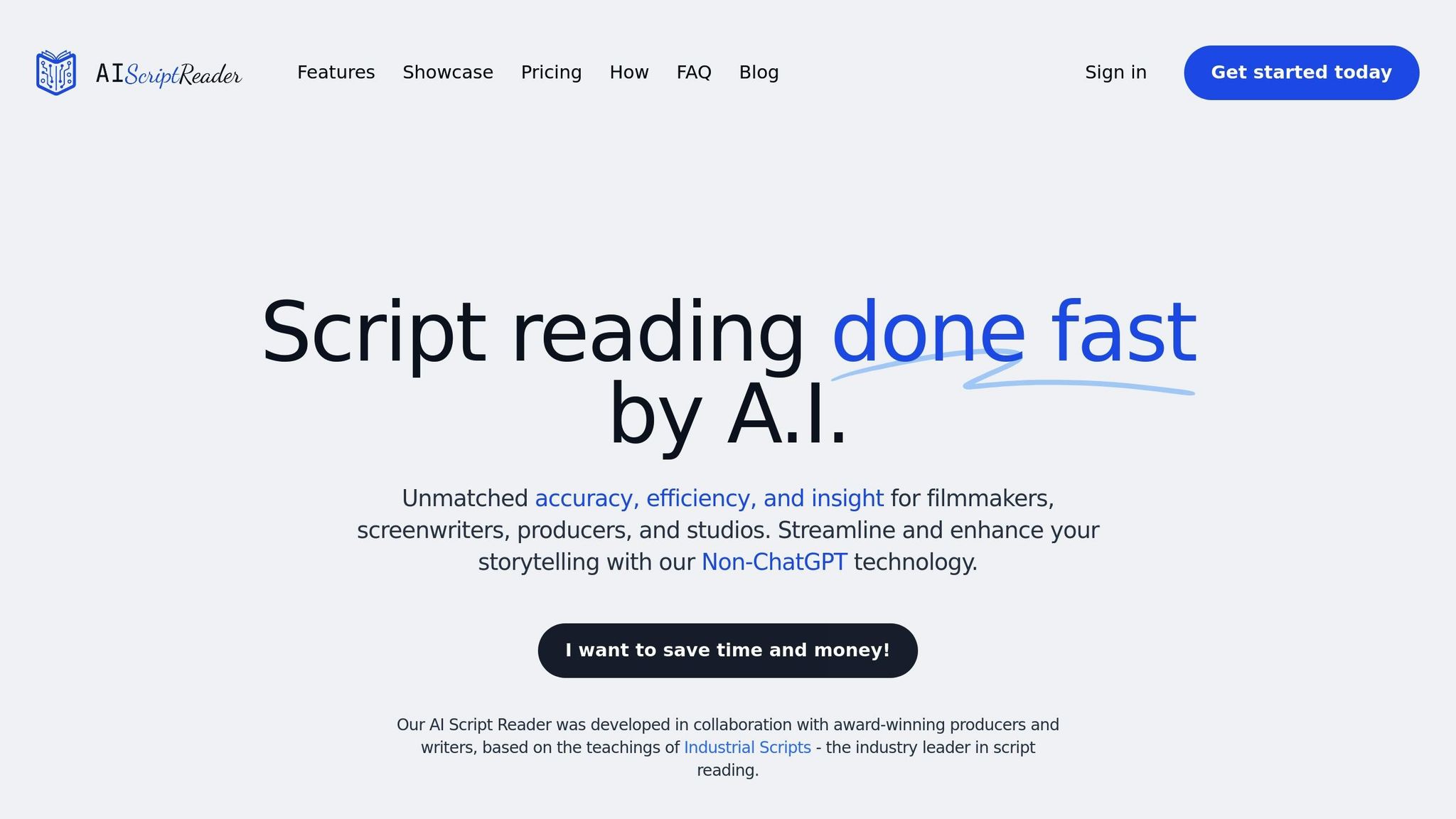
AIScriptReader delivers genre-driven insights directly to screenwriters, producers, and studios through an intuitive platform designed specifically for the U.S. market. This AI-powered tool transforms lengthy script evaluations into quick, data-backed insights, helping creators assess their script's potential to resonate with audiences and succeed in the competitive market.
AIScriptReader Features Overview
AIScriptReader leverages genre algorithms to evaluate a script's market potential, offering two primary services to assist creators.
- Coverage Reports: These provide a concise breakdown of a script, including loglines, synopses, and an in-depth assessment of its strengths, weaknesses, and alignment with market trends. By analyzing genre compatibility and identifying key elements that influence market success, these reports help creators understand where their script stands.
- Development Notes: These offer actionable suggestions for improvement, focusing on areas like character development, pacing, structure, and genre-specific elements. Using proprietary algorithms developed with industry expertise, AIScriptReader ensures its feedback aligns with professional market standards.
The platform also prioritizes confidentiality and script security, offering creators peace of mind while delivering analysis in minutes. This efficiency allows creators to quickly refine their scripts, using insights about genre conventions and current market trends to guide their revisions - all at a fraction of the cost of traditional methods.
AIScriptReader's Simple 3-Step Process
AIScriptReader makes script analysis straightforward with a simple three-step process:
- Upload Your Script: Users start by securely uploading their screenplay in standard formats through the platform’s dashboard. The analysis begins immediately.
- AI-Powered Analysis: The tool evaluates key aspects of the script, such as dialogue, character arcs, plot structure, and genre-specific markers. It compares these elements against market data and successful films in the same genre, identifying strengths and areas for improvement.
- Receive Your Report: A detailed report is delivered directly to the dashboard. This includes recommendations for boosting marketability, insights into genre alignment, and feedback on how the script measures up to industry standards. Whether you’re in the early stages of writing, mid-development, or finalizing your script, AIScriptReader’s analysis can guide your creative process.
Built for the U.S. Market
AIScriptReader is crafted with the U.S. entertainment industry in mind. Its pricing is listed in U.S. dollars, and its services are designed to meet the expectations of the domestic market.
The platform’s algorithms are fine-tuned to reflect the preferences of American audiences and the trends shaping the industry. This makes it an ideal tool for creators aiming to break into U.S. theatrical releases, streaming platforms, or television networks. With flexible pricing options and support available at support@aiscriptreader.com, the platform is well-suited to the fast-paced decision-making environment of Hollywood and beyond.
Conclusion: Genre Algorithms and Script Marketability
Genre algorithms are changing how scripts are evaluated by focusing on elements like narrative pacing, dialogue, character development, and plot structure to gauge their market potential. By analyzing these critical components, these systems provide an objective lens to assess a script's chances of success in a competitive market.
By replacing personal preferences with patterns grounded in market data, these algorithms reduce bias and increase the accuracy of predicting commercial viability. This approach is especially valuable in an industry where thousands of films are written annually, yet only a fraction reach online platforms, and even fewer make it to theaters.
For screenwriters and producers, understanding the expectations of a genre is crucial. As Robert McKee, renowned screenwriter and author, puts it:
"The key to successful genre storytelling is not to follow the formula, but to find the freshness within the formula."
This balance between adhering to genre norms and introducing originality is where algorithms shine. They help identify scripts that deliver on audience expectations while standing out with unique elements.
AIScriptReader is a prime example of how AI converts these algorithmic insights into actionable feedback. With services like Coverage Reports and Development Notes priced at $39 and $69, it provides affordable, professional-grade script analysis once reserved for major studios. Its straightforward three-step process ensures genre-specific feedback that touches on everything from pacing to dialogue, aligning screenplays with audience and market demands.
Beyond evaluation, genre algorithms also play a role in marketing. They help marketing teams quickly and efficiently connect films with target audiences, while offering writers clear storytelling frameworks that align with viewer expectations. This results in a more streamlined development process, where creative choices are guided by data rather than guesswork.
As the entertainment industry continues to evolve, these algorithms are likely to become even more advanced, integrating real-time market trends and shifting audience preferences. For creators aiming to succeed commercially, leveraging these tools is no longer optional. Understanding the nuances of your genre could be the difference between a script that sells and one that gathers dust.
FAQs
How do genre algorithms balance following genre conventions with encouraging originality in scripts?
Genre algorithms work by walking a fine line: they stick to established genre norms while also encouraging fresh ideas. By studying patterns found in successful scripts, these algorithms help ensure a script aligns with what audiences expect - things like structure, themes, and tone.
But they don’t stop there. They’re also built to spot and appreciate creative twists that introduce new perspectives. This combination makes scripts feel both recognizable and inventive, boosting their appeal to audiences while still leaving room for originality.
What challenges do genre algorithms face in capturing cultural nuances and emotional depth in scripts?
Genre algorithms often face challenges when it comes to grasping cultural nuances and emotional depth in storytelling. While they’re great at spotting patterns and crunching data, they fall short in understanding the deeper layers of context, interpreting cultural references, or picking up on subtle emotional cues. This can lead to evaluations that feel distant or fail to capture the richness that makes human storytelling so impactful.
Because storytelling thrives on cultural context and emotional intricacies, AI-driven tools might miss the unique qualities that help a script connect with different audiences. While these algorithms are useful for spotting trends, they can’t replace the human touch needed to evaluate the true heart and soul of a story.
How do genre algorithms adapt their analysis when a script is revised during development?
Genre algorithms are designed to adapt as scripts go through revisions. With every update, they reanalyze key elements like themes, story arcs, and traits specific to the genre, making sure the script stays aligned with its intended category.
By examining multiple drafts, these systems can pick up on changes in tone, structure, or overall vision. This allows them to fine-tune predictions about a script’s market potential and audience appeal. The result? A dynamic process that keeps the analysis precise and relevant, even as the script evolves.
Free Screenwriting Tools
Tools to use alongside your writing — no signup, no cost.
Free Screenplay Editor
Write and auto-format scripts in your browser. Cloud autosave, PDF & Fountain export.
Open tool →AI Script Breakdown
Upload a script and every scene is tagged with its production elements. $29 per script.
Open tool →Get a Full Coverage Report — $39
AI screenplay coverage and development notes in minutes. No subscription.