Top AI Features for World-Building Consistency

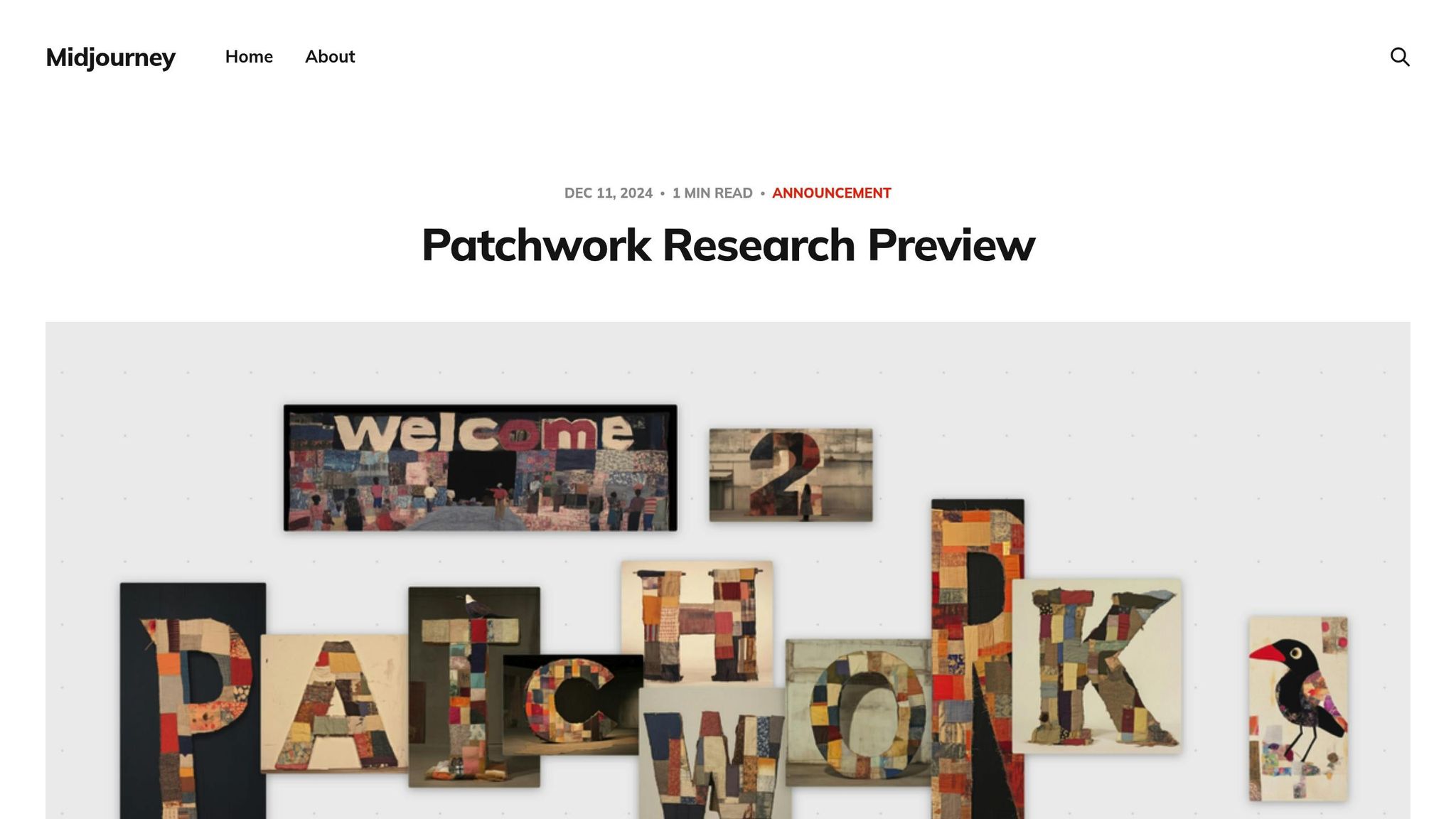
- Patchwork - The Ultimate AI World-Building and Storytelling Application - from Midjourney
- 1. Continuity Tracking and Lore Management
- 2. Logic and Internal Consistency Checks
- 3. Character and Faction Alignment
- 4. Structured World Documentation
- 5. Time and Productivity Enhancements
- 6. AIScriptReader
- Conclusion
- FAQs
Creating a fictional world is complex, and maintaining consistency often feels overwhelming. AI tools are transforming this process by helping writers and creators track details, ensure logical coherence, and streamline workflows. Here’s how AI can help:
- Continuity Tracking: Automatically catalog and cross-reference story details like character traits, timelines, and settings.
- Logic Checks: Analyze your world’s rules to flag contradictions and strengthen internal logic.
- Character and Faction Alignment: Ensure characters and groups stay true to their personalities, goals, and histories.
- Organized Documentation: AI creates structured, searchable databases for easy access to your world’s details.
- Time Efficiency: Automate repetitive tasks, identify inconsistencies in real time, and focus on storytelling.
AI tools don’t replace creativity - they support it, helping creators build immersive, consistent worlds while saving time and reducing errors.
Patchwork - The Ultimate AI World-Building and Storytelling Application - from Midjourney
1. Continuity Tracking and Lore Management
Creating a compelling world for your story goes beyond just the initial spark of imagination - it’s about keeping every detail consistent as your narrative grows. Without careful attention, small details like a character’s past or the rules of your magic system can unintentionally contradict each other, disrupting the flow of your story.
This is where AI-powered continuity tracking steps in. These tools meticulously catalog all established details, cross-referencing new information with your existing lore. They flag inconsistencies and even point out areas that might need further development. For instance, if your story includes a complex political system but skips over its economic structure, the AI can highlight this gap and suggest ways to flesh it out.
Say you mention a character's hometown - AI can instantly pull up related details, like its climate, societal norms, or political environment, ensuring consistency. It can prevent mismatches, like a character from a desert region reminiscing about snowy winters. Beyond just maintaining continuity, AI can also enrich your world by suggesting legends, historical milestones, or political shifts that align with your existing narrative.
Instead of manually sifting through pages to confirm whether a sword was forged from steel or enchanted with magic, AI handles the heavy lifting. It cross-checks these details instantly, freeing you to focus on the creative aspects of your story.
For larger projects, AI becomes even more indispensable. It can track intricate character relationships, subplot developments, and timelines - tasks that would be nearly impossible to manage manually with the same level of precision.
2. Logic and Internal Consistency Checks
While continuity tracking ensures the "what" of your world stays intact, logic checks dive into the "how" and "why" behind it all. These systems analyze the rules of your world, flagging contradictions that could weaken your story's credibility.
Think of AI as your digital logic auditor. It examines how various systems interact within your world. For example, if you've established that magic requires physical components, the AI will flag any scenes where spells are cast without them. Or, if your world operates under a strict social hierarchy, it might question sudden character actions or unexplained access to restricted areas.
Once these checks are in place, the next step is to evaluate how new ideas fit within the existing framework. The real strength lies in testing the connections between different elements of your world. For instance, if healing magic is widespread, the AI might point out its broader effects on population growth, military strategies, or even the economy - bringing to light interdependencies you may not have considered.
The system tracks relationships between various elements of your world. So, if you introduce something like a floating city powered by crystals, the AI will cross-reference it with your established rules for physics, economics, and society. It’ll raise questions like: How do people travel to and from the city? What happens if the crystals run out? How will trade routes adapt?
This process helps you catch logical inconsistencies that could pull readers out of the story. By addressing potential plot holes early, you can fine-tune your world’s details and ensure its magical rules align with your broader themes - creating a more cohesive and immersive narrative. Pairing these logical reviews with continuity tracking strengthens your story’s overall structure.
On top of that, automated logic checks provide objective, real-time feedback. No matter how large or complex your project becomes, AI keeps track of every detail with precision.
3. Character and Faction Alignment
Characters are the backbone of any story, but keeping them consistent as your narrative grows can be a real challenge. AI-powered tools for character alignment act as a safeguard, ensuring your characters stay true to their established traits, motivations, and faction loyalties. These systems meticulously track key elements like personalities, moral codes, and allegiances across every scene. For example, if a cautious character suddenly acts recklessly without a clear narrative reason, the AI flags it as an inconsistency. Similarly, if a faction member strays from their group's core values without proper buildup, the system highlights the issue to maintain narrative coherence.
In addition to tracking individual traits, AI excels at mapping complex character relationships. One standout feature is its ability to monitor intricate webs of alliances, rivalries, and personal connections between characters and factions. This ensures that these relationships remain consistent and continue to shape character decisions. For instance, if two characters share a bitter history, the AI will flag scenes where their interactions seem overly casual, reminding you to account for their past conflicts.
Faction dynamics add another layer of complexity to storytelling. AI tools help maintain the balance between different groups by keeping track of their goals, values, and historical tensions. As Rebecca Shedd puts it:
"While political systems may set the chess board of power and conflict, factions are the pieces on that board".
These tools ensure that factions act logically within the framework of their motivations and constraints, keeping the story grounded.
Modern AI systems can even generate entire cultural systems and political developments that feel like a natural extension of your world. They map rivalries, alliances, and historical tensions, adding depth to your story while ensuring everything fits together seamlessly. When new plot twists arise, the AI cross-references them with existing faction dynamics to preserve overall consistency.
Character consistency isn’t just about personality - it also applies to visual representation. For example, one writer shared how advanced AI tools streamlined the creative process for a short animated film on women empowerment, ensuring both rapid visualization and narrative alignment.
Tracking character evolution is another area where AI shines. It monitors how characters grow over time based on their experiences, ensuring their development feels natural and justified. If a character’s transformation seems rushed or lacks motivation, the AI can suggest adjustments to keep their arc believable.
For factions, AI helps define clear goals and motivations while tracking how these influence member behavior. This ensures that faction conflicts remain rooted in their established histories and values, creating more believable and engaging interactions. By aligning character growth with the larger world dynamics, AI tools help maintain the integrity of your story from start to finish.
sbb-itb-44d62f7
4. Structured World Documentation
Building a rich fictional world often means juggling countless details - character histories, locations, timelines, and cultural aspects. It’s easy to lose track. That’s where AI-powered documentation systems come in, acting as digital curators to organize and retrieve all this information instantly. They ensure you stay on top of your creation without getting overwhelmed.
These systems don’t just store information; they categorize it intelligently. For example, when you add a new character, the AI links them to related events, locations, and cultural elements. This interconnected setup means you can pull up relevant details in seconds. Advanced tools take this even further with cutting-edge retrieval methods.
One standout feature is Retrieval-Augmented Generation (RAG). This system allows writers to upload their story bible and then query it using natural language. Instead of sifting through endless notes, you can just ask, “What are the traditions of the Northern Kingdoms?” and get a detailed answer based on your existing documentation.
Shadmehr Vadoodi, a programmer and AI enthusiast, highlights the value of this approach:
"Storytelling is about imagination, but structure is what holds a world together. Retrieval-Augmented Generation offers a way to unify the two - giving writers a powerful tool to think with their worlds, not just about them".
This kind of structured documentation doesn’t just archive your ideas - it actively strengthens your creative process. By organizing and prioritizing information, it ensures consistency across your narrative.
AI systems also adapt to your current needs. For instance, if you’re writing a scene about political intrigue, the AI can surface details like faction alliances, power struggles, and historical tensions. This contextual awareness puts the most relevant information right at your fingertips, making it easier to stay focused on the scene.
Another advantage? AI can suggest additional lore to fill in gaps. If you create a new culture, the system might propose traditions, historical milestones, or myths that align with your world’s existing rules. This not only adds depth but also keeps your world consistent.
To visualize these connections, many systems use a wiki-style interface. These tools map relationships between characters, locations, and factions, giving you a clear view of how everything ties together.
5. Time and Productivity Enhancements
AI doesn’t just help with tracking and logic - it also makes world-building faster and more efficient. Crafting a detailed world can take ages, but productivity-focused AI tools are changing the game. For instance, automated consistency checks save you from spending hours hunting down errors weeks after they’ve been introduced. Instead, these tools catch issues in real time, making fixes quicker and easier.
AI can spot irregularities like a character knowing something they shouldn’t or a location being described inconsistently. It can even handle batch processing, analyzing multiple documents, character profiles, or setting descriptions all at once. Tasks that might take days to complete manually can now be knocked out in minutes.
On top of that, AI takes care of organizing your work. As you add new details, it automatically categorizes them, links related concepts, and updates cross-references. For example, if you bring a new character into your story, the AI will immediately tie them to relevant locations, events, or other characters based on the context you’ve provided.
One of the standout features is smart suggestions. If your world’s political system feels incomplete or your magic system is missing key details, the AI can identify these gaps and even propose ideas that align with the rules you’ve already established.
For screenwriters and filmmakers, these tools are a lifesaver when juggling complex narratives. AI can quickly review scripts for consistency, track character development arcs, and ensure plot continuity across multiple drafts. This keeps your story cohesive without endless rounds of manual review.
Real-time feedback is another game-changer. Instead of waiting until the end of your project to check for consistency, AI validates your work as you go. This proactive approach prevents small mistakes from snowballing into major problems later on.
Finally, automated reports give you a snapshot of your world at any time. They highlight areas that are well-developed and flag potential conflicts, allowing you to focus on expanding your creative vision without losing track of the details.
6. AIScriptReader
AIScriptReader is a specialized tool designed specifically for screenwriters tackling the unique challenges of crafting consistent and engaging fictional worlds within the screenplay format. Unlike general writing assistants, this platform zeroes in on the intricacies of screenplay-specific world-building, offering tailored support to ensure your script maintains a cohesive narrative from start to finish.
This tool meticulously analyzes each scene for internal consistency, focusing on character motivations, plot continuity, and the intricate details of your world-building. By identifying potential inconsistencies, AIScriptReader helps screenwriters avoid pitfalls that could undermine the believability of their fictional universes. Its critiques are detailed and precise, targeting the elements that hold your world together.
One standout feature is its character analysis capabilities, which dig deep into the emotions, goals, and philosophical conflicts of your characters. It ensures that their actions and decisions align with the established rules and logic of your world. This is especially helpful for complex narratives where even small inconsistencies can disrupt the story’s flow and credibility.
AIScriptReader also offers a skill breakdown system, comparing your script to others in its database. It provides percentile rankings in areas like conflict and originality, giving you insight not only into the strength of your world-building but also how your script stacks up against industry benchmarks.
Speed is another advantage. While traditional script coverage can take up to 10 days, AIScriptReader delivers detailed assessments in just two hours. Studios using AI-powered script analysis have reported a 25% improvement in script selection accuracy and a 35% reduction in revision cycles, significantly streamlining production timelines.
"ScriptReader.ai's depth of feedback is astounding. It's like having a scriptwriting course tailored specifically to your script. Absolutely invaluable!" - Sophia, USA
For screenwriters focused on world-building, AIScriptReader offers two pricing options: Coverage Reports for $39 or Both Reports for $69. The process is straightforward - upload your script, let the tool analyze it, and receive your results.
Powered by proprietary algorithms trained specifically on screenplay structure, AIScriptReader identifies key plot points, tracks character arcs, and ensures your fictional world’s internal logic stays intact throughout your script’s development. This makes it an essential resource for screenwriters aiming to create immersive, consistent worlds tailored to the demands of the screenplay format.
Conclusion
AI is reshaping the way creators approach world-building by taking on the heavy lifting of tracking intricate details, like names, locations, and storylines. This ensures consistency across even the most complex narratives, saving creators from the painstaking task of manual cross-referencing.
Beyond keeping stories cohesive, AI is boosting workflow efficiency in a big way. Tasks that used to take hours - sometimes even days - are now completed much faster. This means creators can spend less time on repetitive chores and more time focusing on the heart of their work: storytelling and creative development.
AI isn't just about speed - it’s also about improving the quality of narratives. These tools can spot plot holes, logical gaps, and character inconsistencies long before they become problems for audiences. Even better, they don’t just flag issues; they suggest creative fixes that strengthen the story’s structure. This kind of support extends seamlessly into broader creative processes.
Modern AI tools go beyond text-based assistance. They can generate visual assets like maps and fantasy artwork, making them invaluable for screenwriters and filmmakers looking to bring their ideas to life. From concept to production, these tools streamline the entire creative journey.
What’s truly remarkable is how AI manages to keep the creator’s unique voice intact. Instead of dulling originality, these tools act as collaborative partners, offering fresh ideas while leaving the final say to the human creator. As the creative world continues to evolve, AI-powered world-building tools are becoming must-haves for writers, game designers, and filmmakers who want to combine efficiency with engaging storytelling. These tools help craft immersive, believable worlds that keep audiences hooked.
FAQs
How can AI tools help maintain consistent character development in my fictional world?
AI tools are incredibly useful for keeping your characters consistent throughout your story. With features like character reference systems, style locking, and behavior tracking, these tools help ensure that your characters' looks, personalities, and actions stay aligned across various scenes and storylines.
This is particularly helpful in avoiding inconsistencies that could disrupt your narrative's flow. By automating continuity checks and providing logical safeguards, AI helps your characters stay faithful to their original design, adding to the seamlessness and credibility of your world-building.
What are the most effective AI tools for ensuring consistency in world-building and story logic?
AI tools tailored for maintaining consistency in world-building are game-changers for storytellers aiming to create immersive narratives. Here’s what makes them stand out:
- Continuity tracking: Keeps tabs on events, timelines, and intricate details, ensuring the story flows seamlessly without contradictions.
- Logic checks: Spots and flags gaps or inconsistencies in the plot, helping to tighten the narrative.
- Character alignment: Tracks character traits, behaviors, and development arcs to make sure they stay true to their established personas.
By handling these intricate details, these tools free up creators to concentrate on crafting rich, engaging worlds without worrying about slipping into inconsistencies.
How can AI tools help creators keep their world-building consistent and well-organized?
AI tools are transforming world-building by introducing intelligent documentation systems that keep every aspect of your fictional universe organized and accessible. These systems function as structured, searchable databases, storing essential details like character development, timelines, and continuity notes. This setup makes it effortless to find specific information, prevent inconsistencies, and maintain a logical flow throughout your story.
By automating tasks such as checking for logical errors and cross-referencing story elements, AI simplifies the creative process. This allows creators to dedicate more energy to storytelling while ensuring their worlds remain immersive and cohesive.
Free Screenwriting Tools
Tools to use alongside your writing — no signup, no cost.
Free Screenplay Editor
Write and auto-format scripts in your browser. Cloud autosave, PDF & Fountain export.
Open tool →AI Script Breakdown
Upload a script and every scene is tagged with its production elements. $29 per script.
Open tool →Get a Full Coverage Report — $39
AI screenplay coverage and development notes in minutes. No subscription.