How AI Evaluates Dialogue in Scripts
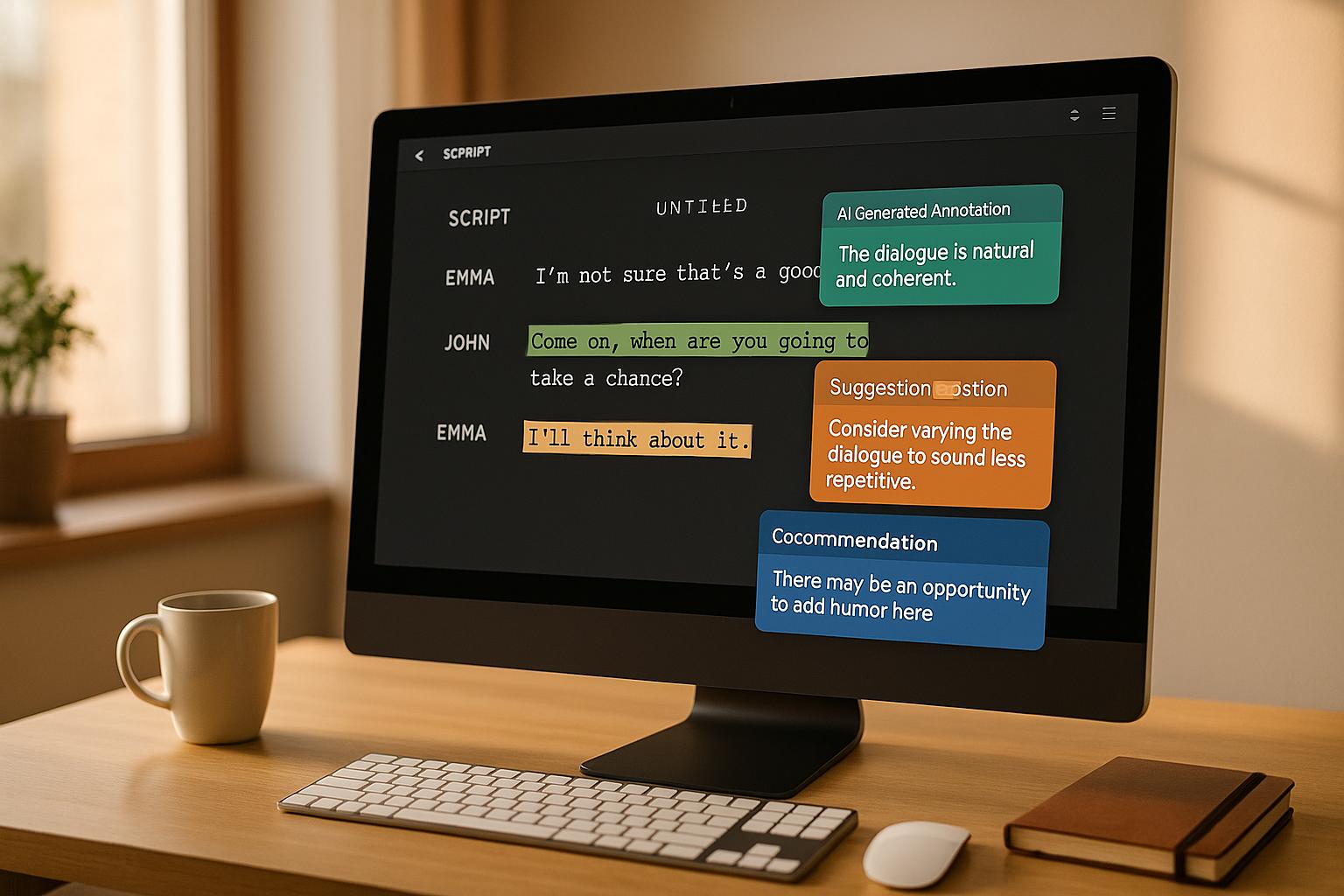
- How To Use Gemini 1.5 Pro to Analyze Your Screenplay
- Main Metrics AI Uses to Evaluate Dialogue
- How AI Tools Process and Analyze Dialogue
- Benefits of Using AI for Dialogue Analysis
- AIScriptReader: AI-Powered Script Analysis
- Conclusion: Improving Dialogue with AI Tools
- FAQs
AI is changing how scripts are analyzed by offering fast, objective evaluations of dialogue. Here's what it does:
- Improves Dialogue Quality: AI checks for tone consistency, emotional flow, pacing, and natural speech.
- Character Voice Analysis: Ensures each character has a unique and consistent voice.
- Market Insights: Predicts audience appeal and identifies commercial potential.
- Saves Time: Tasks that take humans days can be done in hours with AI tools like AIScriptReader.
- Actionable Feedback: Provides specific suggestions for improving dialogue, pacing, and emotional depth.
AI tools like AIScriptReader streamline script development, helping writers refine their work efficiently without replacing human creativity.
How To Use Gemini 1.5 Pro to Analyze Your Screenplay
Main Metrics AI Uses to Evaluate Dialogue
AI systems rely on several key factors to assess how well dialogue works in scripts. These metrics help determine if the dialogue supports the story and creates characters that feel real and engaging for audiences.
Tone and Emotional Changes
AI uses sentiment analysis to evaluate how well a script balances drama, humor, and suspense across scenes. By tracking emotional shifts in conversations, it ensures these changes feel natural and impactful. For instance, it checks if dramatic moments hit the right emotional notes or if comedic beats are timed effectively.
"Integrating sentiment analysis into tone monitoring offers an innovative approach to enhancing communication and understanding client emotions." - Bella Williams
Real-time tone detection plays a big role here. It examines voice intonations and speech patterns to identify emotional states while ensuring characters remain consistent throughout the story. AI also flags mismatches in tone - like a lighthearted remark in a tense confrontation or overly dramatic lines in subtle moments - helping the script stay aligned with its narrative goals.
Once tone is analyzed, the next step is ensuring the dialogue flows naturally.
Pacing and Natural Flow
AI tools evaluate pacing by analyzing how conversations unfold. This includes looking at the rhythm of exchanges, turn-taking patterns, and sentence length variations. These factors help keep dialogue dynamic and engaging while avoiding monotony or awkwardness.
The system also identifies abrupt shifts in topics and examines pauses or breathing spaces in conversations. This ensures rapid exchanges don’t overwhelm the audience and slower moments don’t lose their attention. AI checks whether the dialogue moves the plot forward, develops characters, and keeps the audience engaged. It flags issues like overly expository lines or unnatural phrasing that might disrupt the flow.
After pacing, AI focuses on maintaining distinct voices for each character.
Character Voice Differences
AI examines linguistic style and vocabulary to ensure every character has a unique voice. This helps keep characters consistent with their personalities, backgrounds, and roles in the story.
The system looks at word choice, sentence structure, and speaking patterns to distinguish each character. It flags instances where characters sound too similar or when their speech patterns shift without a clear narrative reason. For example, a reserved character suddenly becoming overly talkative without explanation would raise a red flag.
AI also considers regional and cultural speech patterns. It can be trained to recognize specific phonetic structures, helping scripts capture regional nuances more accurately. Deep learning models, built on diverse voice samples, further enable AI to authentically represent different accents, dialects, and speech styles.
With these tools, AI ensures dialogue feels authentic, engaging, and true to the story.
How AI Tools Process and Analyze Dialogue
AI takes raw script text and transforms it into actionable feedback, focusing on dialogue. By leveraging advanced algorithms, these systems dissect scripts, organize their content, and deliver detailed, multi-faceted insights.
Script Parsing and Structure Analysis
The process begins with AI identifying and organizing the key components of a screenplay. Algorithms differentiate between plot points, character details, and dialogue sections. Dialogue is separated from other elements like action descriptions, scene headings, and character names to allow for focused analysis.
For example, AI parses scripts by pinpointing scene headings, tagging character names, and isolating dialogue blocks. Using Natural Language Processing (NLP), it interprets critical elements such as character traits, plot progression, and overarching themes. This structured breakdown ensures that the script is analyzed thoroughly, with particular attention to plot coherence and character arcs. This foundational organization paves the way for deeper insights, like uncovering subtext in conversations.
Context Understanding and Subtext Detection
Once the script is parsed, AI dives into the deeper layers of dialogue, uncovering the meaning behind the words. By examining the relationships between terms, it identifies context, intent, and nuance. AI systems also rely on memory from prior interactions within the script to track how relationships and character dynamics evolve over time.
Sentiment analysis plays a key role here, decoding the emotional undertones of dialogue to reveal character motivations and feelings. Advanced models like GPT-4 Turbo and Google's Gemini 1.5 enhance this process by integrating text, images, and audio, offering a richer understanding of context. This multi-modal capability allows AI to pick up on subtleties that might escape human readers. With this deeper understanding, AI evaluates dialogue on multiple levels.
Multi-Level Scoring System
AI employs a scoring system to assess dialogue across various dimensions, including clarity, tone, emotional depth, and consistency. This involves several stages - data collection, preprocessing, model training, and calibration - to ensure accurate results.
Voice analytics further streamline the process, significantly reducing the time needed for script revisions. Matisse Tolin, a writer and film festival founder, shared:
"In my fifteen years of writing and reading coverage, I have never seen such helpful analysis turned over with such speed."
This multi-level scoring approach not only evaluates dialogue quality but also measures audience engagement, predicts market performance, and suggests areas for improvement. By delivering unbiased and consistent feedback, AI accelerates the revision process, cutting it down from days to mere hours. This efficiency enables writers and producers to refine dialogue more quickly and effectively.
sbb-itb-44d62f7
Benefits of Using AI for Dialogue Analysis
AI is transforming the way dialogue is analyzed and refined, offering a distinct edge over traditional methods. By leveraging advanced tools, writers and filmmakers can achieve faster results, gain valuable market insights, and make precise revisions that align with audience expectations. Let’s explore how AI is reshaping script development.
Speed and Efficiency in Analysis
One of the most impressive advantages of AI in dialogue analysis is its speed. Tasks that used to take weeks can now be accomplished in mere hours. For instance, AI systems are capable of analyzing thousands of scripts in just minutes.
By automating repetitive tasks like script formatting, dialogue generation, and even plot direction, AI frees writers to focus on the creative aspects of storytelling. Real-time feedback during the drafting stage also shortens the revision process, enabling faster script development.
What’s more, AI doesn’t sacrifice accuracy for speed. It consistently delivers precise evaluations of dialogue, working tirelessly in ways human reviewers simply cannot during long, demanding sessions.
Clear Feedback for Script Revisions
AI doesn’t just work quickly - it also provides clear, actionable feedback that writers can use immediately. These systems evaluate key aspects like dialogue distribution, emotional tone, pacing, and screen time allocation with impressive accuracy. Instead of vague or generic suggestions, AI pinpoints specific issues and offers targeted improvements.
For example, it identifies unnatural or generic lines that might escape a human reviewer’s notice. It also ensures that characters’ voices stay consistent, preserving their unique traits throughout the screenplay.
Director Ava DuVernay captures the collaborative nature of this technology perfectly:
"AI is a powerful lens, but human insight is the light that brings a story into focus."
AI even dives into nuanced areas like subtext detection, emotional undertones, and the dynamics of character relationships. This level of detail helps writers refine their scripts systematically while still staying true to their creative vision.
Market Potential Insights
AI’s capabilities extend beyond creative refinement - it also offers valuable market insights. These systems analyze how well a script aligns with genre conventions and audience preferences, flagging elements that may not resonate with viewers. By examining market trends and audience data, AI helps predict a script’s commercial performance.
Take Warner Bros., for example. By incorporating AI into their screenplay evaluation process, they improved script selection accuracy by 25% and reduced box office flops by 20%. In one case, AI flagged a high-budget film as risky due to a weak storyline. After reworking the script, audience test scores rose by 40%, leading to a 30% higher ROI on a mid-budget project and significantly reducing financial losses from underperforming films over two years.
AI evaluates dialogue patterns, scene effectiveness, and tone to predict audience reactions. This data-driven approach allows filmmakers to align their scripts with audience expectations, replacing guesswork with actionable insights.
AIScriptReader: AI-Powered Script Analysis
AIScriptReader is a cutting-edge tool designed to help filmmakers, screenwriters, producers, and studios evaluate script dialogue with precision. By combining advanced AI technology with established industry practices, it delivers detailed feedback on dialogue effectiveness. Below, we’ll explore its standout features.
Coverage Reports for a Quick Script Overview
Coverage Reports are at the heart of AIScriptReader, offering a concise evaluation of your script's dialogue. These reports highlight strengths, pinpoint weaknesses, and assess market potential, providing you with a comprehensive understanding of how your script performs.
The AI scans dialogue patterns across the entire screenplay, identifying where conversations feel natural and where they might come across as forced or generic. It also ensures that each character’s voice is distinct, allowing readers to differentiate between speakers without relying on dialogue tags.
Producer Brian Jewell shared his thoughts on the tool:
"ScriptReader is as good as it gets. This platform is truly remarkable and it will save you a ton of money. It will break your script down in a professional way and lay it all on the table for you in about 1 hour. Give it a go, you will truly be impressed."
In addition to dialogue analysis, Coverage Reports evaluate pacing and rhythm in conversations, flagging moments where scenes drag or feel too rushed.
Development Notes for In-Depth Feedback
For those looking for more detailed insights, Development Notes offer a line-by-line breakdown of dialogue, complete with actionable suggestions for improvement. Unlike the broader overview provided in Coverage Reports, this feature zeroes in on specific areas that need attention.
Development Notes flag inconsistencies in character speech, highlighting instances where dialogue doesn’t align with a character’s established voice or background. The tool also identifies unnatural phrasing, repetitive patterns, and missed opportunities for subtext.
Writer and Director Kevin Birnbaum shared how it transformed his writing process:
"This tool is revolutionary for screenwriters. It looks at things I never thought were even something to be paid attention to, and now I go back to every scene I thought was brilliant and realize it could still be better."
The feedback goes beyond surface-level edits, offering suggestions to improve emotional depth, tighten wordy exchanges, and enhance the natural flow of conversations. Unlike human reviewers who might overlook subtle issues during lengthy reviews, the AI maintains consistent focus across the entire script.
Simple 3-Step Workflow
AIScriptReader makes professional script analysis easy with its streamlined, three-step process. No technical expertise is required, and setup is quick and straightforward.
- Upload Your Script: Use the user-friendly dashboard to upload your screenplay in standard industry formats. The platform ensures full confidentiality.
- AI Processing: The proprietary algorithms analyze dialogue quality, character voice, pacing, and emotional depth. The process typically takes about an hour.
- Receive Reports: Access detailed, actionable feedback through the dashboard, including recommendations for refining dialogue and improving overall script quality.
With flexible pricing options, AIScriptReader makes professional-grade dialogue analysis accessible to all, eliminating the need for long waits or expensive consultant fees often associated with traditional script coverage services.
Conclusion: Improving Dialogue with AI Tools
AI-powered dialogue analysis is revolutionizing how scripts are developed by offering quick, consistent assessments of dialogue quality. These tools provide objective feedback across entire screenplays, creating an opportunity to integrate AI as a genuine collaborator in the creative process.
By using tools like AIScriptReader, storytelling takes a step toward leveraging data-driven insights. But let’s be clear - these tools aren't here to replace human creativity. Instead, they act as creative partners that support and enhance the writing process. As Oliver Zeller, Art Director and VFX Supervisor, puts it:
"I prefer to look at AI as a team member. And not one that takes the slot of somebody else, especially not at this point. But rather somebody that helps. An entity that helps us alleviate some of the more mundane or just gives us another perspective."
AI tools shine when it comes to spotting dialogue inconsistencies, ensuring characters stay true to their voice, and identifying pacing issues that might slip past human readers. Plus, they offer actionable feedback to improve the flow and impact of dialogue. They’re also invaluable for maintaining a character’s authenticity throughout the script.
For writers aiming to make their scripts more marketable, AI can analyze audience data and provide predictive insights, helping tailor scripts to resonate with specific markets.
The key to successful scriptwriting lies in blending human creativity with AI’s precision. Writers can use AI to overcome creative blocks or spark new ideas, but it’s crucial to carefully review and refine the AI’s contributions to ensure they fit the intended vision. As Elizabeth Strickler from Georgia State's Creative Media Industries Institute explains:
"AI can enhance storytelling by personalizing content, reaching broader audiences, creating evergreen content and inventing new art forms."
AIScriptReader exemplifies how accessible professional-grade dialogue analysis has become. Its flexible pricing eliminates the need for costly consultants and long waits, making it a practical tool for writers, producers, and studios looking to refine dialogue efficiently and effectively.
FAQs
How does AI help ensure each character in a script has a unique and consistent voice?
AI plays a key role in keeping each character's voice distinct and consistent by analyzing their tone, choice of words, and unique way of speaking. This ensures that their dialogue stays true to their personality and emotional state throughout the story.
Tools like AIScriptReader take this a step further by evaluating these language details and offering feedback to screenwriters. This helps writers fine-tune character voices and maintain a seamless flow as the story evolves. By monitoring character arcs and ensuring dialogue consistency, AI makes sure every character feels genuine and remains true to their identity from beginning to end.
How can AI tools like AIScriptReader help predict a script's commercial success?
AI tools like AIScriptReader are transforming the way scripts are evaluated. By analyzing elements like genre, plot structure, pacing, and character development, the tool predicts a script's potential for commercial success. It does this by comparing your script's components to benchmarks from the industry and successful films, offering insights into what resonates with audiences and current market trends.
What’s more, AIScriptReader goes a step further by identifying potential target audiences and delivering actionable feedback to help refine your script. This feedback can enhance its appeal and make it more market-ready. With this data-driven approach, filmmakers and producers can make well-informed decisions about script development and where to invest their resources.
What are the main advantages of using AI to analyze dialogue in scripts?
AI brings some clear benefits to the table when it comes to analyzing dialogue in scripts. Unlike human evaluations, which can vary based on individual perspectives, AI offers consistent and unbiased assessments, eliminating the subjective opinions that often sneak into reviews. Plus, it can handle a massive number of scripts in a short amount of time, which is a big win for the fast-moving film industry.
Another major perk is the immediate feedback AI provides. Writers can use this to fine-tune their work more efficiently, focusing on elements like tone, pacing, and character voice. These tools simplify the creative process, making it easier to make adjustments that feel informed and purposeful. While human input remains valuable for its depth and insight, it can be time-consuming and influenced by personal preferences. This makes AI an excellent partner to traditional methods, balancing speed and objectivity with creativity.
Free Screenwriting Tools
Tools to use alongside your writing — no signup, no cost.
Free Screenplay Editor
Write and auto-format scripts in your browser. Cloud autosave, PDF & Fountain export.
Open tool →AI Script Breakdown
Upload a script and every scene is tagged with its production elements. $29 per script.
Open tool →Get a Full Coverage Report — $39
AI screenplay coverage and development notes in minutes. No subscription.