How AI Predicts Audience Reactions to Scripts
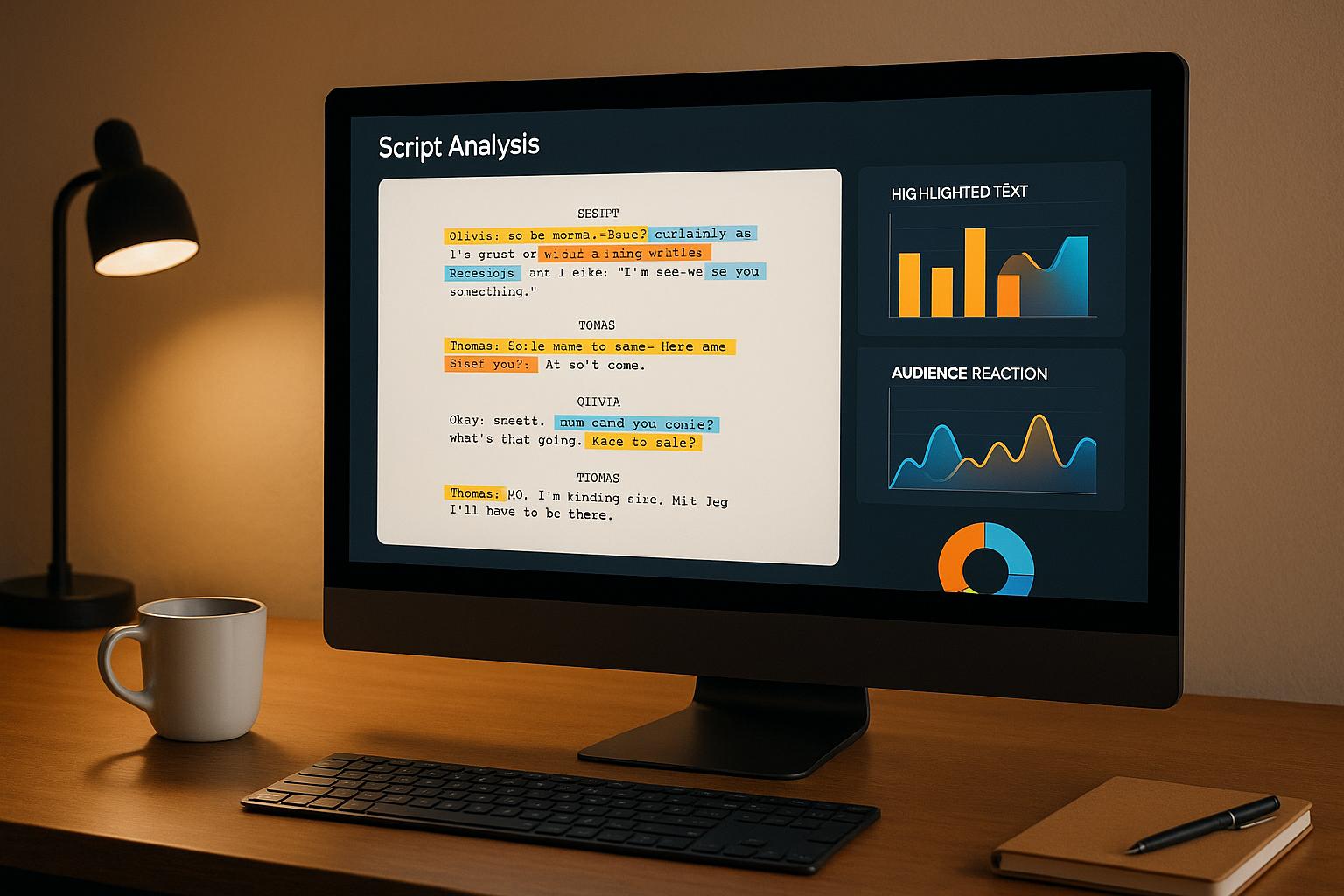
- Largo.ai Script Analysis and Success Forecasting
- Methods AI Uses to Predict Audience Reactions
- Metrics and Results: What AI Shows About Scripts
- AIScriptReader: AI-Powered Script Analysis Made Simple
- Conclusion: The Future of AI in Script Analysis
- FAQs
- How does AI identify genuine emotional depth in a script versus shallow emotions?
- How can AI tools like AIScriptReader help independent filmmakers improve their scripts before pitching to studios?
- What are the challenges of using AI for script analysis, and how can writers protect their creative vision?
AI is transforming how scripts are evaluated, helping screenwriters and producers predict audience reactions before production. By analyzing dialogue, emotional arcs, plot structure, and character dynamics, AI tools provide actionable insights to refine scripts, save costs, and increase audience engagement.
Key Highlights:
- Natural Language Processing (NLP): Analyzes dialogue and character interactions for authenticity and emotional depth.
- Emotional and Sentiment Analysis: Maps emotional highs and lows to maintain audience interest.
- Data-Based Narrative Modeling: Compares scripts to successful films to identify patterns that resonate with viewers.
- Engagement Scoring: Evaluates attention spans and highlights weak points in the story.
- Practical Feedback: Offers specific recommendations for improving dialogue, pacing, and plot structure.
AI tools like AIScriptReader streamline script analysis with quick, detailed feedback, helping creators make data-driven decisions while preserving creative vision. With pricing starting at $39 per report, these tools are accessible to independent filmmakers and studios alike.
Largo.ai Script Analysis and Success Forecasting

Methods AI Uses to Predict Audience Reactions
AI employs a variety of advanced techniques to analyze scripts and predict how audiences might respond. These methods work in tandem to assess elements like dialogue, emotional beats, and narrative flow, offering creators a detailed understanding of their script's potential impact. Each technique adds a unique layer of insight, contributing to a well-rounded evaluation of audience reactions.
Natural Language Processing (NLP) for Script Analysis
Natural Language Processing (NLP) is at the core of AI's ability to analyze scripts. It allows computers to interpret and process human language with remarkable depth. When applied to screenplays, NLP algorithms dissect dialogue, character interactions, and narrative elements to uncover patterns that influence audience engagement.
NLP goes beyond merely identifying words. It captures the subtleties of dialogue, explores character dynamics, and delves into plot intricacies. By analyzing context and subtext, NLP can highlight underlying emotions, relationship complexities, and cultural nuances that might resonate differently across audience groups. This detailed analysis helps writers refine dialogue, ensuring it feels natural and connects with viewers on a deeper level.
Emotional and Sentiment Analysis
Emotional and sentiment analysis focuses on mapping the emotional journey of a script, identifying key moments that resonate and areas that may need improvement. By tracking shifts in sentiment throughout a screenplay, AI pinpoints scenes where characters undergo significant emotional changes and predicts how these moments might affect viewers. This analysis highlights areas where engagement might waver or where emotional connections could be strengthened.
This technique dives into more than just surface-level emotions. It evaluates what evokes joy, frustration, or excitement, while also examining pacing and emotional rhythm. These insights guide writers in fine-tuning emotional highs and lows, ensuring the story maintains its grip on the audience. A script that delivers authentic emotional moments can leave a lasting impression.
Data-Based Narrative Modeling
Data-based narrative modeling takes a broader approach by leveraging extensive databases of successful scripts, audience feedback, and performance metrics. It identifies recurring patterns in narrative structures, plot arcs, and character archetypes that consistently appeal to viewers.
AI systems analyze popular films and TV shows to uncover what works - whether it's specific character traits, dialogue styles, or story arcs. This process even allows for predictive testing of different plot directions, giving writers a chance to see how their choices align with historical trends. While this data-driven method provides valuable insights, it doesn't replace creativity. Instead, it offers a solid foundation for making informed storytelling decisions.
Metrics and Results: What AI Shows About Scripts
AI takes the guesswork out of scriptwriting by providing data-driven insights that help filmmakers predict audience reactions. These insights act as a guide, allowing creators to refine their scripts before production begins. The result? Saved time, reduced costs, and a better chance of connecting with audiences. Let’s dive into how AI evaluates and improves scripts.
Engagement and Attention Scoring
AI breaks down a script’s plot structure, character arcs, and dialogue to assign engagement scores. These scores highlight where audiences are likely to stay interested - and where their attention might waver. By analyzing the flow of the story and the depth of character development, AI pinpoints moments that could either captivate or lose viewers.
The system also evaluates dialogue for authenticity and thematic relevance, ensuring conversations drive the story forward. For instance, Netflix uses AI to analyze viewer preferences and content performance, helping studios identify scripts that have the highest potential to resonate with audiences. These algorithms can uncover patterns in audience behavior that human reviewers might overlook, providing a fresh perspective on what works and what doesn’t.
Emotional Arc Visualization
AI doesn’t just stop at storytelling mechanics - it also maps the emotional journey of a script. By visualizing emotional arcs, it reveals whether the story aligns with patterns that tend to captivate audiences. For example, research shows that the "Man in the Hole" storyline - where a protagonist faces challenges, overcomes them, and ultimately triumphs - is often linked to higher box office success.
Take The Godfather Part I as an example. This film follows the "Man in the Hole" arc, starting on a high emotional note, dipping into darker moments mid-story, and ending with a subtle yet impactful emotional resolution. On the other hand, Spiderman 2 adopts a "Cinderella" arc, starting with trust and positivity, dropping to a low point, and then soaring to an uplifting conclusion filled with anticipation. AI can even predict how individual scenes might emotionally resonate with viewers, offering suggestions to amplify key moments. These insights help writers fine-tune their scripts to create more emotionally engaging stories.
Practical Feedback for Script Improvement
AI goes beyond analysis by offering actionable suggestions to enhance scripts. It identifies plot holes, predicts audience engagement, and flags inconsistencies in character behavior, all while providing specific recommendations for improvement. Whether it’s refining dialogue, adjusting scenes, or tweaking the overall tone, AI ensures the script delivers maximum emotional impact.
Additionally, AI evaluates how well a story connects with its audience, offering detailed reports on plot structure, character growth, and market potential. This allows writers to make informed decisions that align with audience preferences. For example, Warner Bros. partnered with Cinelytic in 2022 to integrate AI-assisted decision-making into their process, while Netflix continues to rely on AI tools to shape its content strategy. These tools enable writers to adjust pacing and sequence early in production, cutting costs and improving creative outcomes.
"Embracing AI in post-production isn't just about keeping up with industry trends; it's about redefining the boundaries of what we can achieve as a team in creating compelling narratives".
These insights are central to AIScriptReader’s in-depth analysis, providing creators with the tools they need to craft scripts that resonate with audiences.
sbb-itb-44d62f7
AIScriptReader: AI-Powered Script Analysis Made Simple
AIScriptReader brings professional-grade script analysis within reach for creators everywhere. Its efficient workflow ensures detailed feedback is delivered quickly, setting the foundation for more informed creative decisions.
How AIScriptReader Works
AIScriptReader simplifies script evaluation into a three-step process, blending speed and depth to deliver actionable insights. Forget the long waits associated with human readers; this platform provides professional-level analysis in record time. Here's how it works:
- Upload your script securely in standard screenplay formats, ensuring confidentiality.
- The AI processes your script using proprietary algorithms developed with input from industry experts and inspired by methodologies like those of Industrial Scripts.
- Within hours, you'll receive detailed reports, enabling swift revisions and creative improvements.
This streamlined approach gives you the tools to iterate faster and make data-driven decisions without sacrificing quality.
Main Features and Benefits
AIScriptReader offers two primary services tailored to different stages of the scriptwriting journey:
- Coverage Reports: These provide producers and executives with an essential overview, including professional loglines, synopses, and evaluations of your script's strengths, weaknesses, and potential in the market.
- Development Notes: For deeper insights, this service offers a scene-by-scene breakdown with specific suggestions for improvement. It highlights issues like plot holes, character inconsistencies, and pacing problems, giving writers a clear path forward.
The feedback has already won over industry professionals. Producer Paul Myerberg put it bluntly:
"If you can't make your script at least 30% better with ScriptReader.ai, you're not doing your job as a writer. In bang for the buck, there's nothing even close".
AIScriptReader evaluates key elements traditionally reviewed by human readers - character development, dialogue, plot structure, and thematic depth - with the added consistency and objectivity of AI. It also identifies ways to challenge clichés and boost originality, ensuring your script stands out while meeting industry benchmarks.
Practical Uses for Filmmakers and Studios
AIScriptReader's features offer tangible benefits for filmmakers, producers, and studios alike.
Independent filmmakers can refine their scripts before pitching to investors or production companies. The platform’s comparative analysis tool evaluates commercial viability by comparing your script to successful films in similar genres.
Producers juggling multiple projects will appreciate the unbiased, consistent analysis that eliminates personal preferences. Actor and writer Kabir Bedi praised the tool, saying:
"Script AI is a brilliant use of AI for script writing. It's a terrific resource for script writers, and for those who have to evaluate scripts".
For studios, integrating AIScriptReader into the development pipeline means identifying promising scripts earlier. Its ability to predict audience engagement helps decision-makers allocate resources more effectively.
Pricing starts at $39 for a single report or $69 for both services. Monthly subscriptions range from $50 to $90, offering flexibility for writers working on multiple drafts.
The subscription model is particularly useful for those refining scripts through multiple revisions. Continuous analysis ensures each draft improves upon the last, accelerating development timelines compared to traditional methods.
Conclusion: The Future of AI in Script Analysis
AI is reshaping how scripts are developed, analyzed, and refined. With the media and entertainment AI market expected to hit $99.48 billion by 2030, growing at 26% annually, integrating predictive analytics into screenwriting has become a game-changer for staying competitive.
Key Takeaways for Screenwriters and Producers
For screenwriters and producers, AI-powered script analysis offers distinct advantages over traditional methods. Studies show it can cut script evaluation time by 50% and significantly reduce production costs. One film, for instance, slashed its budget by over 40% while boosting returns sevenfold.
What makes AI so effective? It can spot patterns, inconsistencies, and trends that might slip past human reviewers. By analyzing massive datasets, AI tools predict audience preferences and provide actionable insights. Disney, for example, uses AI to forecast box office performance and fine-tune marketing strategies by evaluating factors like actor appeal, genre trends, and historical data.
Writer and director Kevin Birnbaum highlighted the transformative nature of these tools:
"This is the most revolutionary tool for screenwriters since screenwriting software was invented. It looks at things I never thought were even something to be paid attention to, and now I go back to every scene I thought was brilliant and realize it could still be better."
AI’s data-driven approach provides objective feedback on elements like plot structure, character arcs, and dialogue, reducing the influence of personal bias. Tools like AIScriptReader make script analysis faster, smarter, and more efficient.
Combining AI and Human Creativity for Better Stories
The real magic happens when AI works alongside human creativity. Monica Landers, founder of StoryFit, stresses that AI should complement the writing process, not replace it. The most compelling stories emerge when data-driven insights are paired with human imagination.
Looking ahead, AI is poised to push boundaries even further. Soon, filmmakers may use AI to gather real-time feedback during test screenings, allowing for adjustments before a film’s official release. Advanced personalization features are also on the horizon, enabling scripts to be tailored to specific audience preferences using detailed data analysis.
Other advancements include natural language processing for deeper script comprehension, virtual reality tools for immersive script visualization, and AI-assisted rewriting capabilities. These innovations are already influencing film education, with screenwriting courses incorporating AI tools and new specializations emerging in collaborative AI-human filmmaking.
Considering the average major studio budget of $65 million, integrating AI can save millions in production costs while increasing box office potential. Stephen McClelland, Digital Strategist at ProfileTree, summed it up perfectly:
"Embracing AI in post-production isn't just about keeping up with industry trends; it's about redefining the boundaries of what we can achieve as a team in creating compelling narratives."
The future belongs to filmmakers who see AI not as a replacement but as a partner - a tool that enhances productivity and enriches the creative process. By adopting technologies like AIScriptReader, the industry can achieve faster turnarounds, make smarter decisions, and deliver stories that deeply connect with audiences.
FAQs
How does AI identify genuine emotional depth in a script versus shallow emotions?
AI dives into the emotional core of scripts by analyzing elements like dialogue, character arcs, and narrative structure. It picks up on emotional cues - such as tone and sentiment - to figure out if the emotions in the story feel genuine or just skim the surface. For instance, rich character development and meaningful relationships often point to a story with real emotional depth.
By leveraging advanced machine learning, AI processes massive amounts of data from scripts and audience reactions to spot patterns that truly resonate with viewers. This allows filmmakers to fine-tune their scripts, crafting stories that strike a deeper emotional chord with their audience.
How can AI tools like AIScriptReader help independent filmmakers improve their scripts before pitching to studios?
AI tools like AIScriptReader are transforming the way independent filmmakers refine their scripts. These tools dive deep into essential elements like plot structure, character arcs, pacing, and even the script's appeal to the market. By highlighting what works well and what needs improvement, filmmakers can craft scripts that meet industry standards and connect with their intended audience.
AIScriptReader provides two standout services to support this process. First, Coverage Reports offer a brief but insightful evaluation of a script's potential and overall appeal. Second, Development Notes deliver practical suggestions to strengthen the story. This efficient approach not only saves filmmakers valuable time but also helps them focus on fine-tuning their scripts, boosting their chances of success when presenting to studios.
What are the challenges of using AI for script analysis, and how can writers protect their creative vision?
AI tools for script analysis can be a great asset, but they’re not flawless. For instance, these tools often fall short when it comes to grasping subtext, emotional depth, or the specific cultural layers within a story. The result? Feedback that might feel a bit too generic or overly focused on patterns - sometimes overlooking the unique qualities that give a script its edge.
That’s why it’s important for writers to view AI as a helpful assistant, not a substitute for human intuition. Use it to pinpoint areas that might need polishing or to spark fresh ideas, but let your own judgment shape the narrative, tone, and emotional resonance of your script. When you combine AI-driven insights with your own creative instincts, you can refine your work without compromising your artistic vision.
Free Screenwriting Tools
Tools to use alongside your writing — no signup, no cost.
Free Screenplay Editor
Write and auto-format scripts in your browser. Cloud autosave, PDF & Fountain export.
Open tool →AI Script Breakdown
Upload a script and every scene is tagged with its production elements. $29 per script.
Open tool →Get a Full Coverage Report — $39
AI screenplay coverage and development notes in minutes. No subscription.