Top Metrics for Evaluating Script Dialogue

- Bad Dialogue vs Good Dialogue (Writing Advice)
- Key Metrics for Script Dialogue Evaluation
- Using AI-Powered Tools for Dialogue Analysis
- How to Improve Your Script Dialogue
- Conclusion and Next Steps
- FAQs
- Keeping Your Characters' Voices Consistent
Script dialogue is central to storytelling - it shapes characters, drives the plot, and connects with the audience. Poor dialogue, however, can ruin even the best story. Here’s how to evaluate and improve it:
Key Metrics for Dialogue Evaluation
- Character Voice Consistency: Ensure each character speaks in a way that reflects their personality and background. Use distinct vocabulary, tone, and habits.
- Natural Flow and Pacing: Dialogue should feel authentic and vary in rhythm to match the scene’s tension or emotion. Avoid filler or forced exchanges.
- Subtext and Hidden Meaning: Add depth by including unspoken emotions or conflicts beneath the surface of conversations.
- Emotional Impact and Character Dynamics: Dialogue should resonate emotionally and reflect character relationships or changes.
How AI Tools Can Help
AI tools like AIScriptReader analyze dialogue quickly, offering feedback on pacing, tone, and character voice. They pinpoint issues and suggest improvements, saving time and guiding writers to refine their scripts. Prices start at $39 for a detailed report.
Next Steps
- Upload your script to an AI tool for analysis.
- Review feedback to identify areas needing improvement.
- Refine dialogue using insights while maintaining your creative voice.
Start improving your script today by focusing on these key metrics and leveraging AI tools for faster, more precise revisions.
Bad Dialogue vs Good Dialogue (Writing Advice)
Key Metrics for Script Dialogue Evaluation
When it comes to crafting compelling dialogue, certain metrics can help assess its effectiveness. These metrics focus on ensuring characters feel authentic and their conversations flow naturally.
Character Voice Consistency
Consistency in a character's voice means that each one speaks in a way that reflects their personality and background. This involves distinct vocabulary choices, sentence structures, and verbal habits. For instance, a college professor might lean on complex sentences and academic jargon, while a teenager might prefer slang and shorter, casual phrases. Keeping this alignment intact helps avoid jarring inconsistencies and strengthens each character's individuality.
Even when characters experience emotional shifts - like stuttering when nervous or snapping with short sentences when angry - their core voice should remain recognizable. One way to ensure this is by creating detailed character biographies that outline their backstory, motivations, and traits. Reading dialogue aloud is another effective method to catch inconsistencies. Pay attention to changes in tone, humor, or formality that might confuse the audience. Tools powered by AI can also assist in spotting deviations, streamlining the revision process.
Natural Flow and Pacing
Natural dialogue flow is essential for creating conversations that feel authentic and keep the story moving. Varying the pacing can add urgency, tension, or moments of reflection. Well-placed pauses and interruptions can reveal character dynamics and help build suspense. Every line of dialogue should serve a purpose, whether advancing the plot or deepening character development. As playwright David Mamet famously stated:
"Nobody says anything unless they want something." - David Mamet
To refine flow and pacing, read the dialogue aloud to catch awkward rhythms. Cut out unnecessary words or exchanges that fail to add to the story or characters. Avoid repetitive small talk or filler that doesn't move the narrative forward. Advanced tools can also help detect pacing issues that might otherwise be missed.
Subtext and Hidden Meaning
Subtext is the layer of meaning beneath the surface of dialogue. It reveals characters' true emotions, motivations, or conflicts without stating them outright. For example, characters might discuss trivial matters while hinting at deeper issues, using metaphors or symbolic language to communicate indirectly. A famous example is "Rosebud" in Citizen Kane, which subtly alludes to lost innocence. Power dynamics, romantic tension, or family struggles often force characters to speak in veiled terms.
To uncover subtext, pay attention to tone and nonverbal cues. Analyze the dynamics between speakers to grasp their true intentions and the underlying messages they may be conveying.
Emotional Impact and Character Dynamics
Dialogue should resonate emotionally, driving both character development and the overall story. The way characters interact and evolve through dialogue can illustrate changes in their relationships and highlight key turning points in the narrative.
For emotional authenticity, the intensity of dialogue must match the stakes of the situation. A character in a life-or-death scenario, for example, would speak very differently from one dealing with a minor inconvenience. Adding layers of conflict within the dialogue can heighten tension and draw the audience in.
It’s also crucial to match the dialogue to the genre. Comedy often relies on quick, witty exchanges, while thrillers build suspense through carefully timed conversations. The emotional tone of the dialogue should align with the script’s overall mood and meet the expectations of the audience.
Using AI-Powered Tools for Dialogue Analysis
Screenwriters and producers are turning to AI tools for a more precise way to evaluate the quality of dialogue in scripts. These tools analyze dialogue using metrics like voice consistency, flow, subtext, and emotional impact - tasks that traditionally required hours of manual review by seasoned professionals. With AIScriptReader, this process becomes faster, more efficient, and highly insightful, making it a game-changer for refining your screenplay.
AIScriptReader Features Overview
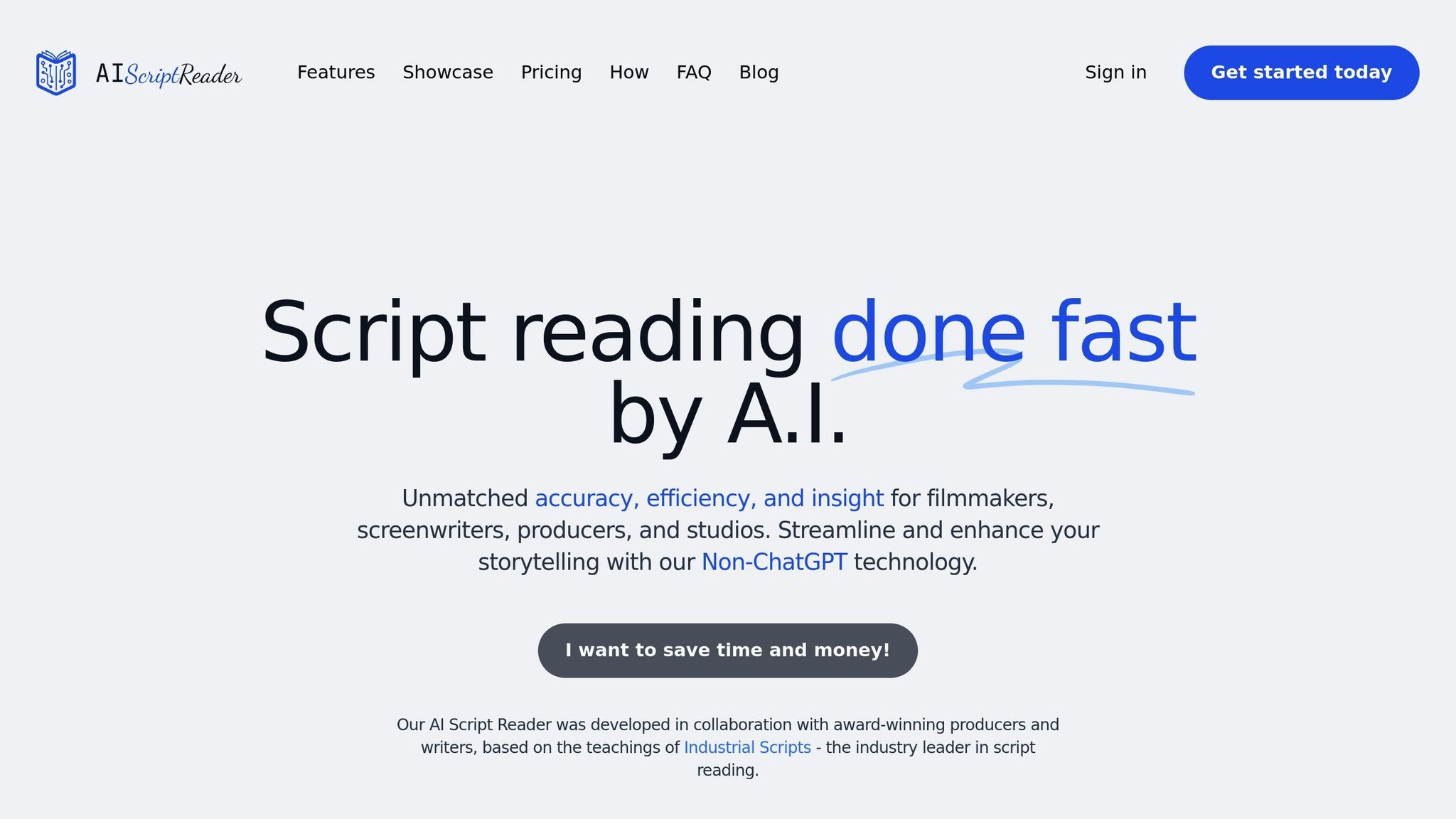
AIScriptReader is designed to support filmmakers, screenwriters, producers, and studios by offering detailed script analysis focused on dialogue. It provides two primary services that help elevate your screenplay:
- Coverage Reports: These reports give a concise breakdown of your script's strengths and weaknesses, with a focus on dialogue. They evaluate how well your characters' voices match their personalities and whether conversations flow naturally, while also assessing the script’s marketability.
- Development Notes: For those seeking more detailed guidance, the platform offers actionable feedback to address specific dialogue issues. These notes provide practical suggestions to help you improve your screenplay.
"AIScriptReader utilizes industry leading technology combined with our proprietary algorithms to enhance accuracy and fulfill specific industry requirements."
The platform also includes a user-friendly dashboard where you can organize your scripts and track revisions. This feature makes it easy to compare drafts and monitor how your dialogue evolves over time.
What makes AIScriptReader stand out is its impressive speed and precision. It can process an entire screenplay in just minutes, pinpointing dialogue inconsistencies and patterns that might take human reviewers hours to identify. This efficiency allows you to iterate on your script more frequently, saving time without sacrificing quality.
3-Step Script Analysis with AIScriptReader
The script analysis process is streamlined into three simple steps, ensuring quick and accurate feedback:
Step 1: Upload Your Script
Upload your screenplay securely to the platform. AIScriptReader ensures confidentiality, protecting your work throughout the analysis process.
Step 2: AI Processing
Using custom algorithms, the platform evaluates your script against industry-standard dialogue metrics. It assesses character voice consistency by analyzing speech patterns and vocabulary, while also examining pacing through dialogue rhythm and density.
Step 3: Receive Your Report
In just minutes, you’ll receive a detailed report highlighting areas for improvement. The feedback identifies scenes where character voices may lack consistency, flags pacing issues, and suggests ways to enhance subtext and emotional depth.
AIScriptReader is also budget-friendly, catering to writers at all career stages. A single Coverage Report costs $39, while a comprehensive package including both Coverage Reports and Development Notes is available for $69. Both options deliver the same fast turnaround and in-depth analysis.
"Yes, AIScriptReader offers industry standard development notes for writers."
This approach takes the guesswork out of dialogue revisions. Instead of wondering if your characters sound distinct enough or if the pacing feels right, you’ll receive targeted feedback based on professional metrics. It’s a smarter, data-driven way to refine your screenplay and bring your dialogue to life.
sbb-itb-44d62f7
How to Improve Your Script Dialogue
After receiving feedback from AIScriptReader, focus on addressing key dialogue issues while staying true to your creative vision.
Finding Priority Areas for Revision
Improving your dialogue starts with pinpointing the areas that will make the biggest difference in your script. Use the AIScriptReader coverage report to identify recurring issues or patterns across multiple scenes.
Start with character voice inconsistencies. If a character’s dialogue shifts tone or style from one scene to another, it can weaken their believability and disrupt the audience’s connection to your story. Look for moments where characters stray from their established voice and address those first.
Next, tackle unnatural flow and pacing issues. Dialogue that feels awkward, rushed, or stilted can pull readers out of the narrative. AIScriptReader often flags conversations that don’t reflect natural speech patterns or where the rhythm feels off. Pay close attention to these sections.
Overly expository dialogue is another common problem. When characters explain plot points too directly, it can feel forced. Instead, aim for more organic ways to reveal information. Scenes flagged repeatedly for this issue should be a high priority for revisions.
Focus your efforts on scenes that overlap with multiple issues. For example, if a particular scene struggles with both pacing and character voice, fixing it could significantly elevate the overall quality of your script. Use AIScriptReader’s impartial feedback to guide these decisions, rather than clinging to dialogue that may not be working as intended.
Once you’ve identified these problem areas, you can use AI insights to refine your dialogue further.
Using AI Feedback in Your Rewrites
With your priorities in place, leverage AI suggestions to strengthen your dialogue while maintaining your creative voice.
For scenes flagged by AIScriptReader, request alternative dialogue options. When a conversation feels awkward or off, use the AI’s feedback to explore new approaches. Focus on specific elements like emotional tone, subtext, or character motivation when refining these moments.
Add emotional subtext to make interactions more compelling. AI tools can suggest ways to layer meaning into conversations, helping characters convey emotions or hide their true intentions. This adds depth and realism to your script.
Remember, AI feedback is a starting point - not the final draft. Review and adjust each suggestion to ensure it aligns with your vision. The best dialogue comes from blending AI’s speed and insights with your personal storytelling instincts.
Finally, read your revised dialogue aloud. Hearing the words spoken can help you spot awkward phrasing and ensure that each character’s voice feels distinct and natural. Acting out scenes can also help you fine-tune the flow and rhythm of your conversations.
Conclusion and Next Steps
Crafting effective script dialogue hinges on four key aspects: character voice consistency, natural flow and pacing, and subtext and hidden meaning. Together, these elements shape conversations that not only feel genuine but also reveal character depth and move the story forward. As Stephen King famously said, "When dialogue is right, we know. When it's wrong, we also know – it jags on the ear like a badly tuned musical instrument".
Great dialogue is more than just words exchanged between characters. It serves multiple functions at once - informing the audience, developing characters, and advancing the plot. It’s a deliberate and stylized tool in storytelling.
To refine your dialogue, precise evaluation is the next step. AIScriptReader simplifies this process by analyzing all the critical dialogue metrics in one comprehensive report. Its AI-driven system compares your script to industry benchmarks, highlighting areas for improvement. Producer Paul Myerberg underscores its value: "If you can't make your script at least 30% better with AIScriptReader, you're not doing your job as a writer. In bang for the buck, there's nothing even close".
Getting started is easy - upload your script to AIScriptReader for instant feedback. The platform offers a free sample review, including story critique and scene analysis for your first three scenes, giving you a clear sense of your dialogue’s strengths and areas needing improvement. For a more detailed assessment, the full coverage report is available for $39 and provides an in-depth evaluation across all the dialogue metrics discussed here.
Once you have your feedback, focus on the areas flagged for improvement. Use the insights to fine-tune your dialogue while staying true to your creative vision. By blending AI’s quick analysis with your storytelling skills, you can make meaningful enhancements.
Start refining your dialogue today - the difference between a good script and a great one often lies in conversations that are authentic, purposeful, and emotionally engaging. With the right tools and a clear understanding of dialogue metrics, you can transform your script into something truly memorable.
FAQs
How do I keep my characters' voices consistent throughout my script?
Keeping Your Characters' Voices Consistent
To keep your characters sounding true to themselves, start by crafting detailed backstories for each one. These backstories should reveal their personality, upbringing, and motivations, all of which influence how they talk and act. Think of their speech patterns - do they use formal language, slang, or a specific accent? These nuances make their dialogue feel genuine and unique.
Another key step is to regularly review your script. Pay close attention to ensure no two characters start sounding alike. A helpful trick? Read their lines out loud. This makes it easier to spot if their voices are blending or if something feels off. By focusing on these details, you’ll bring your characters to life in a way that feels natural and relatable for your audience.
How can I improve the flow and pacing of dialogue in my script?
To make the dialogue in your script flow smoothly and keep the pacing just right, there are a few techniques you can rely on. Start by paying attention to real-life conversations - notice how people talk, including those little pauses, interruptions, or even unfinished sentences. These details can make your dialogue feel more natural.
Next, mix up your sentence lengths and structures. A blend of short, snappy lines and longer, more reflective ones creates a rhythm that keeps things interesting for your audience.
Lastly, give each character their own unique voice. Think about their personality, background, and what drives them. When characters speak in a way that feels true to who they are, the audience will find it easier to connect with them on a meaningful level.
How does AIScriptReader evaluate and provide feedback on script dialogue?
AIScriptReader leverages cutting-edge AI tools, such as natural language processing (NLP) and machine learning, to meticulously evaluate script dialogue. It examines crucial elements like character consistency, dialogue flow, and readability, delivering practical feedback to improve your script.
Beyond dialogue, the platform dives into character arcs and plot structure, ensuring everything aligns seamlessly with the story's overall narrative. With its in-depth coverage reports and development notes, AIScriptReader equips screenwriters with the insights they need to craft more engaging and polished scripts.
Free Screenwriting Tools
Tools to use alongside your writing — no signup, no cost.
Free Screenplay Editor
Write and auto-format scripts in your browser. Cloud autosave, PDF & Fountain export.
Open tool →AI Script Breakdown
Upload a script and every scene is tagged with its production elements. $29 per script.
Open tool →Get a Full Coverage Report — $39
AI screenplay coverage and development notes in minutes. No subscription.