Top Social Media Platforms for Screenwriters
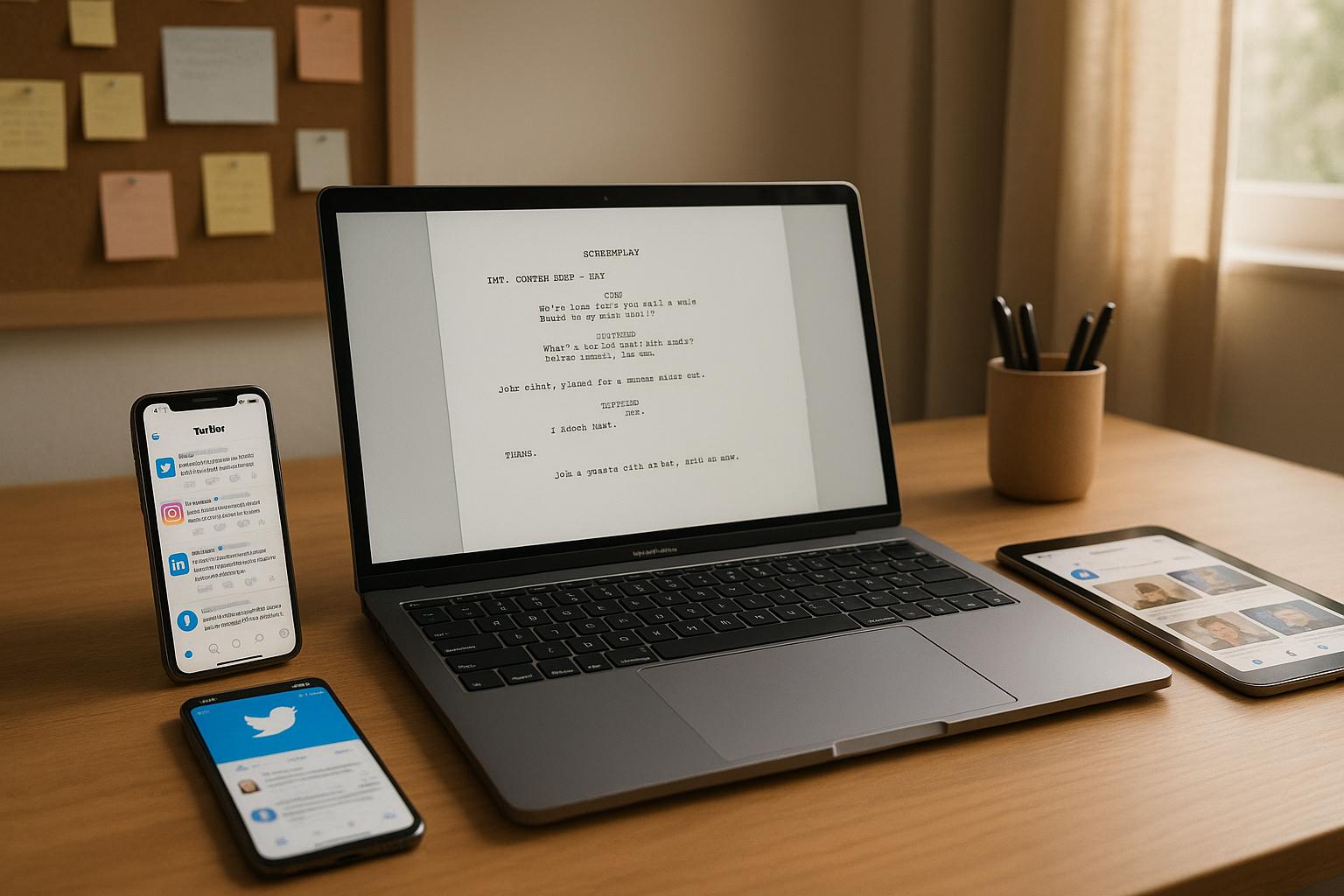
- Mastering Social Media: The Ultimate Guide For Writers To Build Their Author Platform
- Top Social Media Platforms for Screenwriters
- Specialized Platforms for Screenwriters
- How to Build Your Social Media Presence
- Using Script Analysis Tools
- Conclusion
- FAQs
- What are the best ways for screenwriters to use social media to grow their network?
- How do mainstream social media platforms compare to specialized platforms like Stage 32 and The Black List for screenwriters?
- How can AIScriptReader help screenwriters improve their craft and stand out in the industry?
Social media is a powerful tool for screenwriters to network, share their work, and stay updated on industry trends. Platforms like Twitter, Instagram, LinkedIn, Facebook, and TikTok each offer unique ways to connect with professionals, showcase scripts, and build relationships. Specialized platforms like Stage 32 and The Black List further support screenwriters by providing direct access to industry insiders and script evaluation services. Success in screenwriting today relies on combining strong writing skills with a visible online presence.
Key Takeaways:
- Twitter: Engage with industry insiders, join trending discussions, and connect via hashtags like #screenwriting.
- Instagram: Share visuals of your writing process, storyboards, or character designs.
- LinkedIn: Highlight your credentials and connect with producers and agents.
- Facebook: Join groups for networking, feedback, and industry updates.
- TikTok: Use short videos to showcase your scripts or writing tips.
- Stage 32: Network with entertainment professionals and access script services.
- The Black List: Submit scripts for evaluation and increase visibility in the industry.
Quick Comparison:
| Platform | Best For | Key Features |
|---|---|---|
| Real-time industry engagement | Hashtags, trending discussions, direct interactions | |
| Visual storytelling | Photos, Reels, storyboards, behind-the-scenes content | |
| Professional networking | Resume building, connecting with agents and producers | |
| Community building | Groups, events for networking and feedback | |
| TikTok | Creative outreach | Short-form videos, trends, and writing-related challenges |
| Stage 32 | Networking with industry professionals | Direct access to producers, directors, and script services |
| The Black List | Script evaluations | Professional feedback, increased visibility, and access to industry reviewers |
To stand out, focus on building genuine connections, sharing engaging content, and ensuring your scripts are polished with tools like AIScriptReader, which offers script feedback starting at $39. A blend of networking and strong writing can help you break into the competitive world of screenwriting.
Mastering Social Media: The Ultimate Guide For Writers To Build Their Author Platform
Top Social Media Platforms for Screenwriters
Each social media platform brings something different to the table. Knowing which ones align with your goals can help you connect with the right audience and showcase your talents. Here's a breakdown of how screenwriters can make the most of each platform.
Twitter (X)
Twitter is a go-to platform for real-time interaction with industry insiders. Its fast-moving environment makes it ideal for sharing quick updates, joining discussions, and letting your personality as a writer shine.
Here’s why Twitter works for screenwriters:
- Direct engagement: Interact with established writers, producers, and agents directly.
- Industry conversations: Participate in trending discussions about film, TV, and screenwriting.
- Hashtag communities: Use hashtags like #screenwriting, #WritingCommunity, and #FilmTwitter to connect with like-minded individuals.
Posting witty or thought-provoking tweets is a great way to get noticed. Jump into conversations, comment on industry news, and share updates about your projects to grow your network.
Instagram’s visual focus makes it a fantastic platform for screenwriters who want to share the creative aspects of their journey. It’s all about building your personal brand through imagery and storytelling.
Ways screenwriters can use Instagram:
- Behind-the-scenes glimpses: Share photos from film festivals, your writing space, or your creative process.
- Visual storytelling: Post storyboards, character mood boards, or images from location scouting.
- Stories and Reels: Use these features to introduce scenes, characters, or even script snippets in creative ways.
Sharing snapshots of your journey not only builds your brand but also deepens your connection with your audience.
When it comes to professional networking, LinkedIn stands out. It’s built for career growth and offers screenwriters a chance to highlight their credentials while connecting with industry leaders.
Why LinkedIn is essential for screenwriters:
- Showcase your expertise: Build a detailed profile with your resume, writing credits, and samples.
- Network with professionals: Connect with producers, agents, and experienced screenwriters.
- Share industry insights: Post articles, updates, and thoughtful commentary to demonstrate your knowledge.
Staying active on LinkedIn can lead to real career opportunities. Follow companies you admire, engage thoughtfully with their content, and share your perspective on current trends. As Lee Hamilton from Shore Scripts shares:
"I secured my job with Shore Scripts nearly nine years ago after subscribing to professional online networking job-seeking sites, and subscribing to Facebook groups like Screenwriting Staffing's. These can be a great way to make connections and find entry-level work early on in your career, especially if you live remotely. They're sometimes paid, and sometimes unpaid, but the more experience you can add to your resume, the better."
Facebook’s massive user base makes it a valuable tool for connecting with a broad audience. It’s particularly effective for engaging with millennials and Generation X, who remain highly active on the platform.
How Facebook benefits screenwriters:
- Groups and Events: Join groups to network, exchange feedback, and promote workshops or screenings.
- Content sharing: Highlight your achievements, share helpful resources, and post film-related content.
Facebook groups are especially useful for peer reviews, script swaps, and staying updated on industry news that could lead to new opportunities.
TikTok
TikTok has quickly become a favorite for reaching younger, highly engaged audiences. With 41% of its users aged 16–24 and 90% of them using the app daily, it’s a vibrant space for screenwriters to showcase their creativity.
How screenwriters can use TikTok:
- Short-form videos: Share tips, insights into your writing process, or even quick lessons.
- Creative showcases: Bring your scripts to life by filming short scenes or introducing characters.
- Trend participation: Jump into writing-related trends and challenges to gain visibility.
TikTok’s format allows you to connect with a younger audience without needing a big production budget.
Each platform offers unique opportunities to promote your work and connect with others in the industry. Whether it’s Twitter for real-time conversations, Instagram for visual storytelling, LinkedIn for professional networking, Facebook for community building, or TikTok for creative outreach, the key is to choose platforms that align with your goals and use them to their full potential.
Specialized Platforms for Screenwriters
While mainstream social media platforms provide general networking opportunities, specialized platforms tailored for screenwriters offer tools designed to advance careers. These platforms focus on script evaluation, building industry connections, and fostering professional growth.
Stage 32

Stage 32 serves as a dedicated networking hub for entertainment industry professionals, boasting a community of over 325,000 members. It was created to bridge the gap for talented writers who lack traditional industry connections. As the platform’s mission states:
"Stage 32 was created by someone tired of seeing talented people quit because they didn't have connections. Its mission is to give us access so that we don't give up on our dreams."
One of the platform's standout features is its free access to an extensive network of industry professionals. Writers can engage directly with producers, directors, and other key players, which has earned Stage 32 recognition from major outlets like Forbes, Huffington Post, Los Angeles Business Journal, The Hollywood Reporter, and Deadline.
To get the most out of Stage 32, it’s essential to fully complete your profile. Use your real name, upload a professional headshot, and provide detailed information about your work. The platform also offers a Script Services feature, connecting writers with executives who specialize in specific genres and formats. These professionals provide actionable feedback to help refine your scripts.
While Stage 32 emphasizes networking, The Black List focuses on showcasing and evaluating scripts.
The Black List
The Black List has become a prestigious platform for unproduced screenplays since its founding in 2004 by Franklin Leonard. It allows screenwriters to submit their work for professional evaluation, with nearly 5,000 industry professionals reviewing scripts. The platform prioritizes identifying scripts that are "the most compelling" rather than simply "the best", giving unique and innovative stories a chance to stand out.
Using The Black List does require an investment. Hosting a script costs $30 per month, and professional evaluations come with additional fees. However, fee waivers are available for writers facing financial challenges. To succeed on the platform, aim for evaluation scores of 8 or higher to increase your visibility within the industry. Focus on strong story structure, engaging characters, and originality to make your script more appealing. Staying active by updating your profile and participating in community features can also help maintain your presence.
Both platforms cater to different aspects of a screenwriter's journey. Stage 32 is ideal for building connections and joining a supportive community, while The Black List provides a pathway to professional script evaluations and industry exposure.
sbb-itb-44d62f7
How to Build Your Social Media Presence
A solid social media presence is a must for screenwriters. It’s not just about being visible - it’s about being engaged and strategic. Here’s how to make it happen.
Building your presence online requires thoughtful planning, consistent effort, and authentic interaction. The key? Connecting with industry professionals and fellow writers through meaningful content and active participation.
Connecting with the Community
Social media isn’t just a platform for self-promotion - it’s a place to build relationships. Engage with posts from producers, directors, and experienced writers by sharing thoughtful comments and insights. This kind of interaction shows you’re paying attention and genuinely interested in the industry.
You can also use direct messages to introduce yourself and explore potential collaborations. But tread carefully. Writing coach Jenna Avery, founder of Called to Write, offers this advice:
"A big mistake writers can make is coming on either as too strong, or as desperate to make connections, particularly on social media."
Supporting your peers is another way to strengthen your network. Celebrate their wins, offer constructive feedback, and show genuine interest in their work. This goodwill can go a long way in the screenwriting community. Joining webinars or live discussions hosted by industry experts is another smart move. While A-list producers may be out of reach, connecting with emerging professionals - like up-and-coming producers or managers - can be a stepping stone to bigger opportunities.
Once you’ve started engaging with your community, amplify these efforts by sharing content that reflects your skills and creativity as a screenwriter.
Posting Quality Content
To keep your audience interested and showcase your talents, mix up your content. Share writing tips, snippets from your scripts, or behind-the-scenes moments that highlight your process. For visual platforms like Instagram, you could transform script excerpts into graphics or storyboards to grab attention.
When sharing your work, consider posting brief, watermarked excerpts to protect your intellectual property while still giving your audience a glimpse of your talent.
Consistency is key. Develop a personal brand by sticking to a few core themes and a recognizable visual style. Don’t be afraid to balance professionalism with personality - share anecdotes and personal experiences that reflect your journey as a writer. This blend of expertise and authenticity can make your profile stand out.
Finally, invite feedback. Constructive criticism not only helps you grow but also shows you’re open to collaboration and improvement.
Once you’ve got your content strategy in place, it’s time to measure how well it’s working.
Tracking Your Performance
Analytics tools are your best friends when it comes to understanding how your audience interacts with your content. Keep an eye on metrics like follower growth, engagement rates, and reach. You can also track website traffic with Google Analytics to see how social media drives people to your portfolio or projects.
If you’re on a budget, there are plenty of affordable tools to help you monitor performance. Tools like Rival IQ (starting at $239/month) offer detailed competitive analysis, but there are also less expensive options that provide basic tracking features. Some even include AI-powered insights to help you identify trends and figure out the best times to post.
Studying what works for others in your genre can also provide valuable insights. Analyze competitors to see what resonates with their audiences and adapt those strategies to your own style.
Above all, keep your tone professional. As Jenna Avery wisely puts it:
"An important rule of thumb is to be professional and stay away from negativity...be constructive and thoughtful, even when you have something you want to critique. Your wisdom will speak volumes about the kind of person you are and be much more attractive to people who might want to work with you."
Using Script Analysis Tools
A well-polished script not only enhances your credibility but also boosts your impact on social media. Before sharing your work online, it’s worth refining your screenplay using professional analysis tools. These digital platforms assess key elements like structure, character development, pacing, and overall market potential, helping you pinpoint strengths and address weaknesses before putting your script out there for the world to see.
What makes these tools so effective? They provide quick, unbiased feedback that can significantly speed up your revision process. While feedback from other screenwriters is always helpful, these tools offer structured, industry-standard insights that might reveal issues you hadn’t considered. With this level of refinement, you can confidently share excerpts, loglines, or pitch materials on platforms like Twitter or LinkedIn, knowing your script has been thoroughly vetted.
In today’s crowded digital space, many screenwriters are turning to data-driven feedback to make a stronger impression. AIScriptReader is one such tool, offering tailored, AI-powered evaluations designed to help your work stand out.
How AIScriptReader Helps Screenwriters
AIScriptReader provides two core services to help you refine your script before sharing it online:
- Coverage Reports: These offer a concise overview of your script’s strengths, weaknesses, and marketability. Perfect for a quick evaluation, these reports include insights on plot, character development, dialogue, and commercial viability. They also feature loglines and synopses, giving you a clear picture of where your script stands.
- Development Notes: For a deeper dive, Development Notes provide detailed, scene-by-scene feedback. These notes include actionable suggestions for revisions, whether it’s refining a character’s arc or tightening up the pacing of a specific scene. This level of detail helps you align your script with industry expectations, one step at a time.
Using advanced algorithms, AIScriptReader delivers thorough, professional-grade feedback. Whether you’re preparing to share your script on platforms like Stage 32 or crafting a social media post about your latest project, this analysis ensures your material is ready to shine.
Pricing is straightforward: a single Coverage Report costs $39, while the combination of a Coverage Report and Development Notes is available for $69. This makes professional script analysis accessible to writers at any stage of their journey.
Simple Script Review Process
AIScriptReader simplifies the review process with a three-step workflow that’s intuitive and user-friendly, even for beginners. All you need to do is upload your script, let the AI analyze it, and receive a detailed report. This streamlined process provides fast, actionable feedback, ensuring your script is ready for its public debut.
The platform emphasizes security and confidentiality, with quick turnaround times that fit seamlessly into your writing schedule. A user-friendly dashboard allows you to manage multiple projects, making it easy to track revisions and progress.
Here’s how you can make the most of this process: Start by uploading your draft to receive a Coverage Report. This will highlight key areas for improvement, such as dialogue or pacing. After revising your script based on this feedback, you can confidently share excerpts on Instagram, create engaging Twitter threads about your writing journey, or connect with industry professionals on LinkedIn.
An iterative approach works best. Use the Coverage Report and Development Notes to identify critical areas, prioritize revisions, and tackle them in subsequent drafts. Each revision brings your script closer to industry standards, leaving you with a polished, professional piece that’s ready to capture attention on social media.
Conclusion
Achieving success in screenwriting takes more than just raw talent - it demands strategic connections, polished scripts, and a keen understanding of the evolving industry. By leveraging social media platforms and script analysis tools, screenwriters can build a solid foundation for breaking into the competitive world of film and television.
Platforms like Twitter, Instagram, and LinkedIn open doors that traditional networking often cannot. They provide direct access to producers, directors, and fellow writers who might otherwise remain out of reach. Combining this strategic use of social media with your creative abilities can transform a passion for storytelling into a viable career.
But networking is just one piece of the puzzle. Social media visibility plays a significant role in today’s entertainment industry. Jason Newman, a producer at Untitled Entertainment, highlights this shift:
"If I have two actors up for the same role and it's between actor A and B, and actor B has 2 million followers across all social media platforms, and actor A has 20 million… we know if we convert one and a half to two percent of their social media following to buyers, I'm hiring that person."
This same principle applies to screenwriters. Building an online presence not only helps you connect but also creates opportunities to showcase your work to a broader audience.
Before sharing your scripts online, it’s crucial to ensure they’re polished and meet industry standards. Tools like AIScriptReader can help with this, offering services such as Coverage Reports ($39) and Development Notes ($69) to refine your work and make it pitch-ready.
The screenwriting world is evolving quickly, with major platforms investing heavily in original content. For example, Snapchat introduced 12 shows in 2018, while Meredith produced 10 for Instagram's IGTV. Staying informed about these shifts is essential for any aspiring screenwriter.
Success in this field requires a balance of creativity and strategy. Use social media to cultivate genuine relationships, showcase your unique voice, and stay updated on industry trends. At the same time, ensure your scripts are professionally reviewed and ready to impress. This combination positions you as not just a talented writer, but as a savvy professional who understands the business side of screenwriting.
FAQs
What are the best ways for screenwriters to use social media to grow their network?
Screenwriters can tap into the power of social media to connect with industry professionals and fellow writers. Platforms like Facebook groups and Reddit forums dedicated to screenwriting offer spaces to participate in discussions, share experiences, and even tackle trending writing challenges. Using hashtags like #Screenwriting or #AmWriting can boost your visibility and help you engage with a broader community.
Consistency plays a big role here. Regularly posting updates about your projects, offering thoughtful feedback to others, and staying active in conversations can open the door to meaningful connections. Twitter and Instagram, for example, are excellent for showcasing your work - whether it’s sharing snippets of your scripts, behind-the-scenes moments, or interacting directly with producers, agents, and other creatives. Social media isn’t just about visibility; it can also be a gateway to valuable feedback, networking opportunities, and potential collaborations.
How do mainstream social media platforms compare to specialized platforms like Stage 32 and The Black List for screenwriters?
Mainstream platforms like Facebook, Twitter, and LinkedIn are excellent for general networking and reaching a broad audience across different industries. They offer a way to build a wide online presence and connect with people from all walks of life.
However, if you're a screenwriter or entertainment professional, specialized platforms like Stage 32 and The Black List might be more up your alley. These platforms are tailored specifically to the needs of the entertainment world, providing tools to showcase scripts, connect with producers, and explore career-focused opportunities. For those looking to advance in screenwriting, these niche platforms offer a more focused and industry-relevant way to engage with the community.
How can AIScriptReader help screenwriters improve their craft and stand out in the industry?
AIScriptReader is a game-changer for screenwriters looking to sharpen their skills and stand out in the competitive film industry. With its detailed script evaluations, including Coverage Reports and Development Notes, it helps writers pinpoint what’s working, tackle areas that need improvement, and elevate the overall quality of their scripts.
A well-crafted script doesn’t just improve a writer’s odds of success - it also becomes a valuable asset in their professional portfolio. This can catch the eye of industry insiders, leading to fresh opportunities and strengthening their reputation within the screenwriting world.
Free Screenwriting Tools
Tools to use alongside your writing — no signup, no cost.
Free Screenplay Editor
Write and auto-format scripts in your browser. Cloud autosave, PDF & Fountain export.
Open tool →AI Script Breakdown
Upload a script and every scene is tagged with its production elements. $29 per script.
Open tool →Get a Full Coverage Report — $39
AI screenplay coverage and development notes in minutes. No subscription.