Ultimate Guide to Genre-Specific Script Analysis

- Genre Mastery: What Every Writer Needs to Know
- Genre Conventions and Their Impact
- Methods for Genre-Specific Script Analysis
- Measuring Script Market Potential by Genre
- Tools for Genre-Specific Script Analysis
- Conclusion: Mastering Genre-Specific Script Analysis
- FAQs
Want your screenplay to stand out? Genre-specific script analysis is key to aligning your work with industry standards and audience expectations. It evaluates how well your script fits its genre, enhancing its appeal to producers and viewers. Here's what you need to know:
- Why It Matters: Each genre has unique rules and patterns. Understanding them helps you meet audience expectations while crafting a script that feels engaging and market-ready.
- Key Elements Analyzed: Plot, character development, pacing, emotional tone, and structure - tailored to your genre.
- Breaking or Following Rules: Master the balance between sticking to conventions and introducing new twists to keep your story fresh.
- Market Potential: Scripts with clear genre alignment are 50% more likely to get full reads from industry professionals.
- Tools: AI-driven platforms like AIScriptReader offer fast, detailed feedback on genre-specific elements, saving time and money.
Takeaway: Nail your genre, refine your script, and boost its chances of success in today’s competitive market.
Genre Mastery: What Every Writer Needs to Know
Genre Conventions and Their Impact
Diving deeper into the importance of genre-specific analysis, understanding genre conventions is key to crafting a script that resonates. These conventions act as the blueprint for storytelling, shaping the way narratives unfold and aligning with what audiences expect when they watch a film. Think of them as the shared language between filmmakers and viewers - setting the stage for emotional engagement and narrative clarity. Mastering these conventions not only enhances the storytelling but also increases a script's appeal in the competitive marketplace.
What Genre Means in Screenwriting
In screenwriting, genre defines much more than just a label - it dictates the structure, tone, and themes of your story. Each genre comes with its own "rulebook", influencing everything from character types to how the plot unfolds and where emotional highs and lows land.
Take horror, for instance. These scripts often follow a rhythm of mounting tension, introducing threats, and delivering scares at just the right moments. Action films, on the other hand, thrive on adrenaline-pumping sequences, clear hero-villain dynamics, and resolutions achieved through physical confrontations. Romantic comedies? They lean on charming "meet-cute" moments, humorous misunderstandings, and heartfelt, happy endings.
Genre labels are not just for storytelling - they're also a marketing tool. They help audiences quickly identify films they'll enjoy and guide production companies looking for projects that fit their niche. Writing within a genre taps into a storytelling tradition that viewers already relate to, making it easier to connect emotionally. Plus, targeting industry professionals becomes more effective when your script aligns with their genre preferences.
By understanding these frameworks, you’re better equipped to meet - and sometimes challenge - audience expectations.
Why Genre Expectations Matter
Genre conventions establish a roadmap for storytelling, setting up what audiences anticipate even before the opening credits roll. This predictability isn’t a limitation - it’s a tool that helps writers create meaningful connections.
"Genre acts as a framework for creating relatable experiences. Audiences connect emotionally with familiar arcs, like redemption in dramas or triumph in adventures." - glcoverage.com
Different genres appeal to different types of audiences. Thrillers, for example, draw in viewers looking for suspense and adrenaline, while romantic comedies attract those craving lighthearted romance. Marketing materials like trailers and posters lean heavily on these conventions to reinforce audience expectations. Recognizable genres also simplify the process of matching scripts to audiences, enhancing a film’s commercial potential. A great example is the 2023 comedy hit "Barbie", which proved the lasting appeal of the comedy genre by achieving impressive box office numbers.
With audience expectations so important, the next step is understanding how bending or breaking these conventions can lead to truly engaging storytelling.
Following Rules vs. Breaking Them
Mastering a genre isn’t just about following its rules - it’s about knowing when to stick to them and when to break them. Striking this balance between the familiar and the unexpected is what keeps audiences hooked.
While conventions provide a solid foundation, originality lies in how you introduce fresh twists.
"The key to successful genre storytelling is not to follow the formula, but to find the freshness within the formula." - Robert McKee, Screenwriter and Author
Hollywood thrives on new trends and genre-blending because these approaches attract wider audiences and boost box office returns. Mixing elements from multiple genres can also broaden a film's appeal, reaching different audience segments simultaneously. But the trick is to balance these elements carefully so that fans of each genre feel satisfied.
To successfully subvert genre conventions, you first need to understand them inside and out. Audiences come with clear expectations, and breaking those expectations without reason can feel jarring or unearned. However, when done thoughtfully, subverting conventions can create unforgettable moments that elevate your script. Finding this balance is crucial for making your screenplay stand out in the marketplace.
Methods for Genre-Specific Script Analysis
Once you understand the conventions of a genre, applying focused analytical techniques can help fine-tune your script’s appeal. These methods dig into the essential elements of each genre, ensuring your script aligns with what audiences expect while still standing out.
Breaking Down Scenes and Structure
Start by reviewing your script’s structure to see if it fits within the framework of your chosen genre. This involves dissecting how acts, scenes, and sequences come together to form the backbone of your story. For instance, thrillers often introduce a threat in the first act, intensify the stakes in the second, and resolve the tension in the third. Horror stories, on the other hand, build unease and dread throughout their structure.
Breaking your script into individual scenes and sequences allows you to assess its narrative flow. Every scene should push the story forward. In action films, this might mean building toward explosive, high-energy moments. Romantic comedies, by contrast, rely on scenes that foster chemistry and deliver humor. As you evaluate each scene, ask yourself if it contributes to the overall plot and delivers what audiences expect from the genre.
The pacing of your script is another critical element. Scene length and transitions play a massive role in setting the rhythm. Short, fast-paced scenes are ideal for thrillers, creating a sense of urgency. Meanwhile, dramas can afford longer, more introspective scenes to deepen character development and explore emotions. Adjusting pacing and transitions to suit your genre ensures your story keeps viewers engaged.
From here, shift your focus to the characters driving the story.
Character Types and Their Functions
Genres often depend on specific character archetypes to shape their narratives. Recognizing and using these archetypes effectively can help you craft characters that resonate with audiences.
Identifying Character Archetypes
Archetypes are recurring character types and symbols that reflect universal human experiences. In action films, for example, you’ll often find the Hero (like Luke Skywalker in Star Wars), the Mentor (Obi-Wan Kenobi), and the Shadow or antagonist (Darth Vader). Fantasy stories frequently feature the Mentor (think Gandalf in The Lord of the Rings) or the Trickster (Loki from Norse mythology). Dystopian tales, such as The Hunger Games, center on a Hero facing overwhelming odds, like Katniss Everdeen.
"Archetypes in literature are timeless character types, symbols, and narrative patterns that appear across cultures and centuries, shaping the way stories are told and understood."
– Sophie Blackwood
Analyzing Character Functions
Consider how these archetypes interact to drive the plot. In romantic comedies, for example, characters often create complications or resolve romantic conflicts. Mixing archetypal traits can add depth, resulting in characters that feel layered and relatable.
"Archetypes provide a way to tap into these universal patterns, creating characters and narratives that resonate with audiences on a deep level."
– Sarah Lee
Finding and Using Genre Patterns
Once you’ve analyzed your script’s structure and characters, look for patterns common to your genre. Recognizing these recurring elements can sharpen your storytelling. By studying successful films or books in the genre, you’ll gain insight into the narrative beats and tropes that audiences expect.
Each genre typically revolves around a central question or theme. Horror, for example, often explores the question, “What happens when we confront our deepest fears?” Romantic comedies ask, “How can love prevail despite obstacles?” Understanding these core questions can help you outline scenes and structure your story around key moments. For example, action movies frequently include chase scenes, fight sequences, and moments of triumph, while mysteries hinge on clues, red herrings, and dramatic revelations.
Working with Tropes Effectively
Tropes serve as the building blocks of a genre. Use them to create a familiar framework, but don’t forget to add your own spin. As Gabriela Pereira, Founder of DIY MFA, notes:
"Tropes create a familiar shape; your unique voice adds distinctive flair."
– Gabriela Pereira
Blending tropes from multiple genres can also lead to fresh storytelling. Just make sure these elements align with the emotional and thematic heart of your story.
Breaking Patterns Strategically
Sometimes, breaking the rules can make your script stand out. Subverting familiar beats or flipping expectations can breathe new life into well-worn characters and settings. For example, try placing your protagonist in a setting that contrasts with their usual environment or include subtle nods to other works to add layers of meaning. As Pablo Picasso famously said:
"Learn the rules like a pro, so you can break them like an artist."
– Pablo Picasso
sbb-itb-44d62f7
Measuring Script Market Potential by Genre
Understanding how your script fits within its genre and evaluating its market potential are crucial steps in positioning it for success. Each genre operates within its own set of market dynamics, and analyzing these systematically can significantly impact whether your script gets produced or stays on the shelf.
Key Market Factors
When assessing your script's market potential, several factors will weigh differently depending on the genre. A major consideration is the originality of your concept. Does it bring something new to the table? For instance, a horror script with a fresh take on traditional scares is more likely to grab attention than one that rehashes tired tropes.
Pacing is another critical element. Action films thrive on fast, high-energy sequences, while dramas often rely on slower, more deliberate storytelling. Your script's pacing should align with audience expectations for its genre while keeping them hooked.
Audience appeal and production budget are also essential. A niche horror film might attract a smaller, dedicated fan base, while a family comedy could have broader appeal. However, if your script requires a budget well beyond what's typical for its genre, securing funding could become a challenge.
Striking the right balance between genre norms and inventive twists can make your script stand out. By respecting audience expectations while introducing fresh elements, you can create a story that feels both engaging and new.
Market trends also play a significant role in evaluating a script's timing and commercial potential. For example, between 1995 and 2024, adventure films led North American box office revenue with $67 billion, followed by action films at $60 billion. Meanwhile, audience preferences are shifting - comedies saw an increase in popularity from 20% in 2020 to 30% in 2025, while action films dropped from 28% to 20% over the same period.
The importance of clearly defining your genre can't be overstated. Scripts with well-defined genres are 50% more likely to get full reads from industry gatekeepers, and 72% of agents consider genre clarity a non-negotiable for new clients. These factors highlight the need for a structured approach to evaluating your script's market potential, including the use of professional rating systems.
Rating Systems for Genre Analysis
Professional script coverage often uses structured rating systems to evaluate a script's alignment with genre-specific criteria. Typically, scripts are rated on a three-tier scale: Pass, Consider, and Recommend. A Pass suggests the script needs significant revisions, while a Consider indicates it has potential but requires some improvement. A Recommend signals that the script meets production standards and has strong market potential.
In addition to these qualitative ratings, many coverage reports assign numerical scores (on a 1-10 scale) for elements like plot, dialogue, pacing, character depth, and commercial appeal. Some even break these scores into percentiles or letter grades to provide clear benchmarks against industry standards.
The evaluation focuses on core aspects such as concept strength, character development, story structure, and thematic consistency. Scripts that go through multiple rounds of genre-specific feedback are 33% more likely to be flagged as production-ready by agents.
Leveraging Market Data for Script Evaluation
Concrete market data can further refine how you evaluate your script. Industry trends and audience preferences provide valuable insights for shaping your project and positioning it effectively. For example, in 2025, adventure, action, and horror films grossed approximately $1.41 billion, $1.20 billion, and $690 million, respectively. These figures offer a clear perspective on the revenue potential of various genres.
Shifts in audience behavior also matter. Currently, 62% of viewers favor streaming over theatrical releases, a trend that could influence your script's budget and distribution strategy. Additionally, over 75% of younger audiences are calling for more inclusive casting and narratives. While younger viewers lean toward comedies, older audiences tend to prefer dramas.
Social media's impact can't be ignored either - nearly 70% of moviegoers say it influences their decision to watch a film. Emerging trends point to a growing interest in hybrid genres, authentic storytelling, diverse representation, and socially conscious themes.
The financial benefits of diversity are particularly noteworthy. Jade Abston, a UCLA doctoral candidate and co-author of a study, emphasizes this point:
"Diversity is a key part of the big financial picture. Diversity travels. When a film lacks diverse faces and perspectives, it's just not as appealing here and abroad."
To make the most of market data, it's a good idea to regularly review box office reports, keep an eye on film festival outcomes, and use analytical tools to stay updated on trending genres. By combining this research with your creative instincts, you can craft a script that is both commercially viable and artistically compelling.
Tools for Genre-Specific Script Analysis
Traditional script analysis has often been a slow and expensive process. But now, AI-powered tools are transforming how writers and producers evaluate scripts, offering instant, detailed feedback tailored to specific genres. Let's take a closer look at how AIScriptReader is leading this change.
How AIScriptReader Enhances Script Analysis
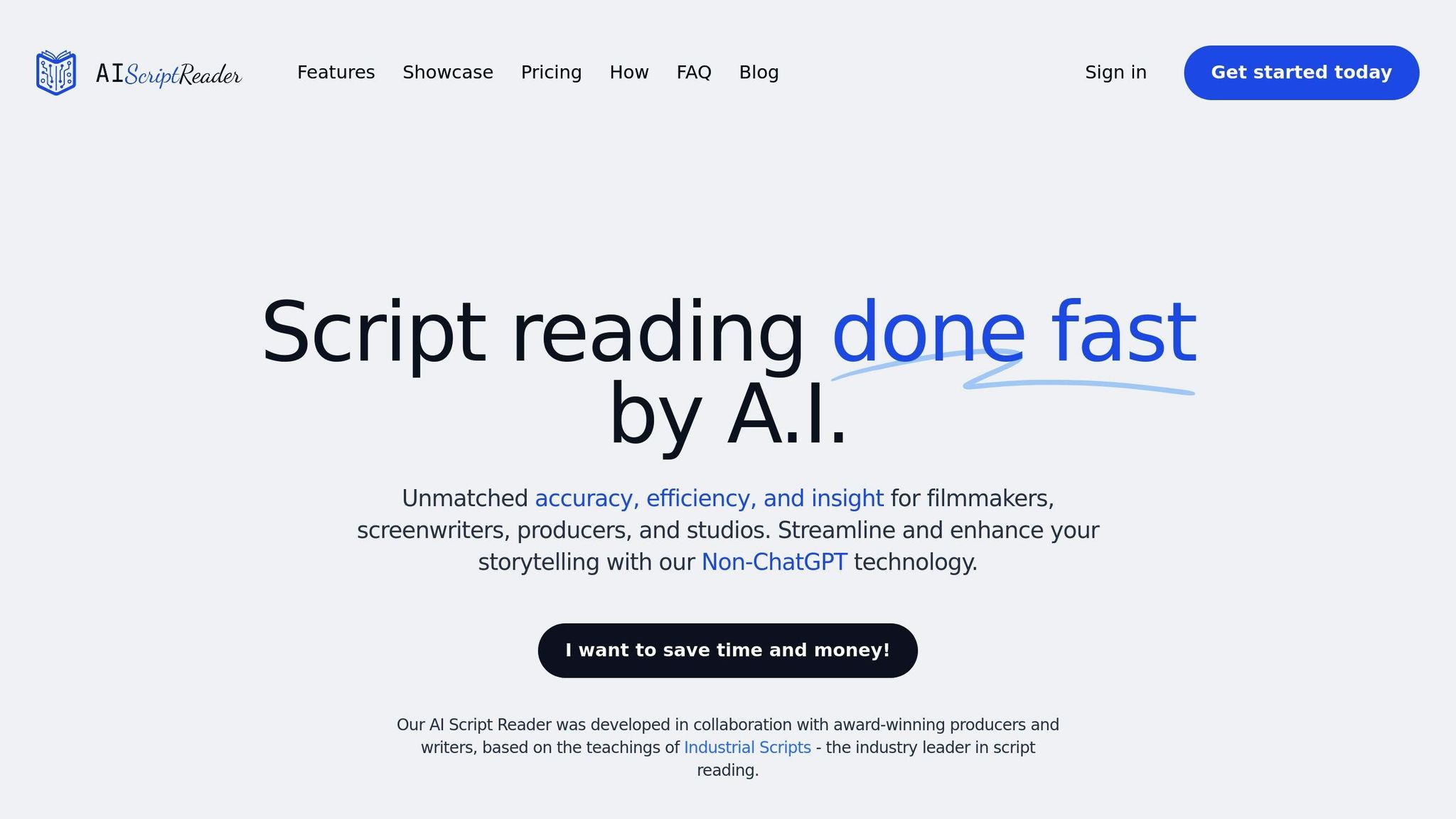
AIScriptReader provides a thorough breakdown of your script in just minutes. It examines each scene individually, offering feedback on structure, character development, tone, and even marketability. It also identifies plot holes, themes, and how well your script aligns with its intended genre. On top of that, it creates a complete summary of your film's events and even writes a logline, streamlining the development process.
The platform delivers two key tools: Coverage Reports and Development Notes. Coverage Reports give a concise overview of your script's strengths, weaknesses, and market potential. Development Notes dive deeper, offering actionable suggestions to refine your work. This dual approach caters to both producers, who need the big-picture view, and writers, who benefit from detailed guidance.
AIScriptReader’s analysis is designed to align with the genre-specific techniques discussed earlier, ensuring your script meets professional standards.
Industry experts have praised its impact. Kevin Birnbaum, a writer, director, and editor, shared:
"This is the most revolutionary tool for screenwriters since screenwriting software was invented. It looks at things I never thought were even something to be paid attention to, and now I go back to every scene I thought was brilliant and realize it could still be better."
Developed in collaboration with award-winning producers and writers, and built on the teachings of Industrial Scripts, AIScriptReader guarantees feedback rooted in industry expectations.
Why Automated Script Analysis Stands Out
AIScriptReader brings several clear advantages to the table. Using advanced AGI technology (non-ChatGPT), it ensures highly accurate and unbiased evaluations. Unlike traditional methods, which can be influenced by personal preferences, this tool focuses strictly on how well your script adheres to genre conventions and market demands.
Speed and accessibility are other major benefits. AIScriptReader delivers both Coverage Reports and Development Notes in minutes, allowing writers to quickly refine their scripts without exceeding their budgets.
Its consistency is especially valuable for genre-specific scripts. Whether you're working on a psychological thriller, a romantic comedy, or an action-packed blockbuster, AIScriptReader applies the same rigorous standards to every project.
Brian Jewell, a producer, writer, and actor, highlighted its effectiveness:
"ScriptReader is as good as it gets. This platform is truly remarkable and it will save you a ton of money. It will break your script down in a professional way and lay it all on the table for you in about 1 hour. Give it a go, you will truly be impressed."
Pricing starts at $39 for a single report or $69 for both Coverage and Development Notes, making it an affordable option for frequent evaluations. On average, users have saved $64 by using AIScriptReader discount codes.
For writers tackling genre-specific challenges, AIScriptReader is a game-changer. It can help determine whether your horror script builds the right amount of tension, your comedy keeps the laughs coming, or your action sequences deliver the excitement audiences expect - all without the high costs and delays of traditional analysis methods.
Conclusion: Mastering Genre-Specific Script Analysis
Understanding genre-specific script analysis is more than just a technical skill - it's a game-changer for breaking into and thriving in the industry. Scripts with clearly defined genres are 50% more likely to receive full reads from industry professionals, and a staggering 72% of agents won’t even consider new clients without a clearly established genre.
Focusing on genre during script revisions can significantly enhance a script’s chances of success. In fact, scripts that undergo multiple rounds of genre-specific feedback are 33% more likely to be production-ready. On the flip side, scripts labeled as "genre confused" are twice as likely to be dismissed outright.
To master genre, you need to strike the perfect balance between respecting conventions and introducing originality. Screenwriter Scott Myers puts it best:
"Knowing a genre means you will be informed about what has come before which can help you avoid too closely duplicating scenes or key beats in previous movies".
This balance is crucial when you consider audience preferences. From 1995 to 2010, the top-grossing genres reflected clear trends: Comedy dominated with a 24.21% market share, followed by Adventure at 19.49%, Drama at 18.43%, and Action at 17.14%. These figures highlight the importance of aligning your script with market demands while still offering something new.
To refine your approach, here are two essential steps:
- Define your core genre early. Nail it down during the outline phase, not just before submission.
- Stay informed on genre trends. Use this research to ensure your script feels relevant and market-ready.
In a fast-moving industry that values efficiency, understanding genre conventions is more critical than ever. Whether you’re a writer polishing your craft or a producer evaluating a project’s potential, genre-specific analysis is an invaluable tool. Success lies in meeting audience expectations while delivering fresh, surprising elements. By honoring the traditions of your genre and pushing its boundaries, you position yourself - and your script - for success in today’s competitive marketplace.
FAQs
How does understanding genre conventions make my screenplay more marketable?
Understanding genre conventions is crucial if you want your screenplay to grab attention in a crowded marketplace. When your story aligns with the expectations of a particular genre, it speaks directly to the audience and fits the framework that producers and studios are often seeking. This not only gives your script a polished edge but also boosts its chances of being seen as a market-ready project.
By mastering these conventions, you can create narratives that are both engaging and creatively distinct. A well-crafted, genre-specific screenplay shows you can balance familiarity with originality - two key ingredients for connecting with audiences and standing out in the industry.
How can screenwriters strike the right balance between following and breaking genre conventions?
To find the right balance in storytelling, start by diving deep into the core conventions of your chosen genre. These conventions are like a roadmap - they guide audience expectations and make your story instantly recognizable. Once you’ve got a solid grasp of these basics, you can start to experiment. For instance, blending elements from different genres or putting a fresh spin on familiar tropes can make your work stand out. Imagine adding humor to a thriller - it can turn a tense narrative into something unexpectedly engaging.
If you decide to bend or break genre rules, make sure those changes genuinely enhance your story. They should still align with your characters and themes to keep the script cohesive and relatable. By staying true to the essence of your genre while introducing creative twists, you can create a script that feels both fresh and grounded, making it more appealing to both audiences and industry professionals.
How is AI-driven script analysis different from traditional methods when evaluating genre-specific elements?
AI-powered script analysis leverages cutting-edge algorithms to pinpoint genre-specific tropes, themes, and structures with a level of consistency that's hard to achieve through traditional means. While conventional methods often rely on subjective human interpretation, AI brings an objective, data-driven approach to the table.
What’s more, AI can swiftly analyze huge collections of scripts, delivering in-depth insights about how a script matches up with current market trends and genre expectations. This combination of speed and accuracy makes AI an invaluable resource for refining a script's appeal and creative edge.
Free Screenwriting Tools
Tools to use alongside your writing — no signup, no cost.
Free Screenplay Editor
Write and auto-format scripts in your browser. Cloud autosave, PDF & Fountain export.
Open tool →AI Script Breakdown
Upload a script and every scene is tagged with its production elements. $29 per script.
Open tool →Get a Full Coverage Report — $39
AI screenplay coverage and development notes in minutes. No subscription.